
Zero Down Car Loans: Used Cars vs New Cars
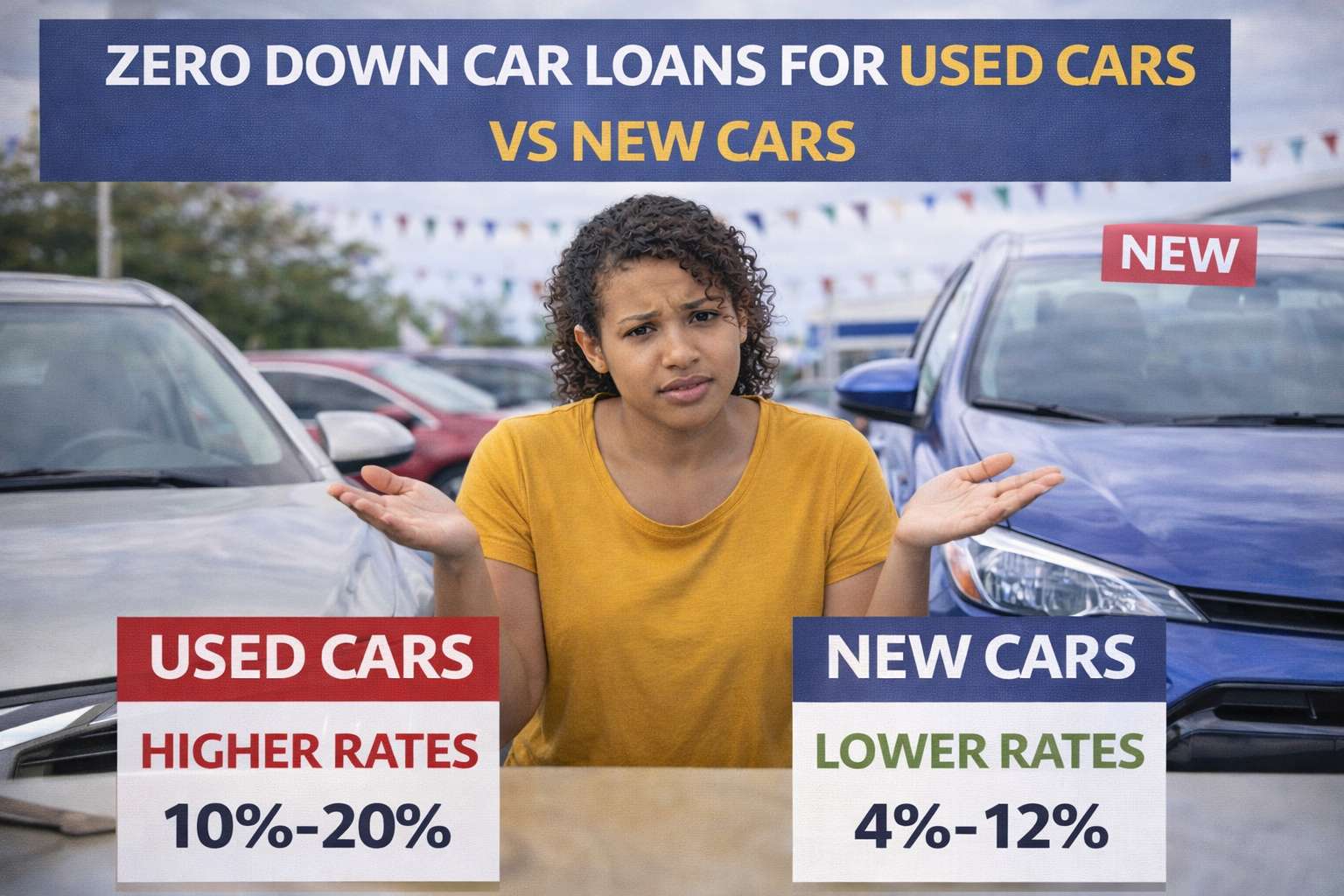
Zero down car loans can look the same on paper whether the vehicle is new or used—but the long-term outcomes are often very different. For buyers with bad or rebuilding credit, choosing between a new or used car with zero down isn’t just a preference decision; it’s a financial strategy. Depreciation, loan balance, and future flexibility all behave differently depending on the vehicle’s age. Making the wrong choice can lock you into negative equity for years. This guide breaks down how zero down car loans compare for used cars versus new cars, so you can choose the option that creates the least long-term risk.
Why Zero Down Changes the Comparison
When no money is put down, you’re financing the full cost of the vehicle from day one. That makes depreciation, loan structure, and interest far more important than appearance or features.
With zero down, the goal isn’t getting the newest vehicle—it’s minimizing how far upside down the loan becomes.
How Depreciation Differs Between New and Used Cars
New cars depreciate fastest early
New vehicles typically lose a significant portion of their value in the first year of ownership. That drop happens whether the car is financed or not.
With zero down, this early depreciation almost guarantees negative equity shortly after purchase.
Used cars absorb depreciation earlier
Used vehicles have already gone through their steepest depreciation. While they still lose value, the drop is usually slower and more predictable.
This makes it easier for the loan balance to catch up to the vehicle’s value over time.
Loan Size and Interest Impact
New cars usually mean larger loans
New vehicles cost more upfront, which increases the loan balance when nothing is paid down.
With bad credit interest rates, higher loan amounts translate directly into more interest paid over the life of the loan.
Used cars keep loan balances smaller
Lower purchase prices typically mean smaller loans. Even with similar rates, total interest paid is often much lower with used vehicles.
Negative Equity Risk Over Time
With new cars and zero down, negative equity often lasts longer. The combination of high initial depreciation and slow principal reduction makes early exits difficult.
Used cars, while not immune, usually allow equity to build sooner—especially when paired with reasonable loan terms.
Approval and Flexibility Considerations
Zero down approvals on new cars
New vehicles sometimes allow more flexible approval structures because of perceived value.
However, approval ease doesn’t reduce long-term risk if the loan is oversized or stretched.
Used cars and approval realism
Used vehicles often come with price ceilings, but those limits can work in the buyer’s favor by keeping loans more manageable.
Ownership Costs Matter More With Zero Down
Fuel, insurance, maintenance, and repairs all affect whether a zero down loan stays affordable.
New cars may come with fewer early repairs, but higher insurance costs. Used cars may need more maintenance, but lower insurance and replacement costs can balance that out.
When a Zero Down New Car May Make Sense
A new car with zero down may be reasonable if:
- The price is modest
- The loan term is conservative
- Income is stable
- Long-term ownership is planned
Even then, the risk of early negative equity remains.
When Zero Down Used Cars Are Often Safer
Used cars with zero down often work better when:
- Budget is tight
- Credit is rebuilding
- Flexibility may be needed later
- Loan terms are longer
Lower purchase prices reduce exposure if circumstances change.
Common Mistakes Buyers Make
Choosing based on monthly payment alone
Low payments can hide long-term cost and equity problems—especially with new cars.
Ignoring future exit options
Life changes happen. A loan that’s impossible to exit early creates stress when flexibility is needed.
How to Decide Between Used and New
Ask yourself:
- How long do I realistically plan to keep this vehicle?
- Could I handle being upside down if I needed to sell or trade?
- Does this loan leave room for unexpected expenses?
Honest answers usually point clearly to the safer option.
The Safer Zero Down Strategy
Zero down loans already start at a disadvantage. Choosing a vehicle that minimizes loan size and depreciation impact helps offset that risk.
For many bad credit buyers, used vehicles quietly provide more protection—even if new cars feel more appealing.
Choosing Stability Over Excitement
With zero down financing, stability should outweigh novelty.
A vehicle that supports consistent payments and gradual credit rebuilding is more valuable than a short-term upgrade that limits future options.