
Income & Job Stability for Zero Down Car Loans
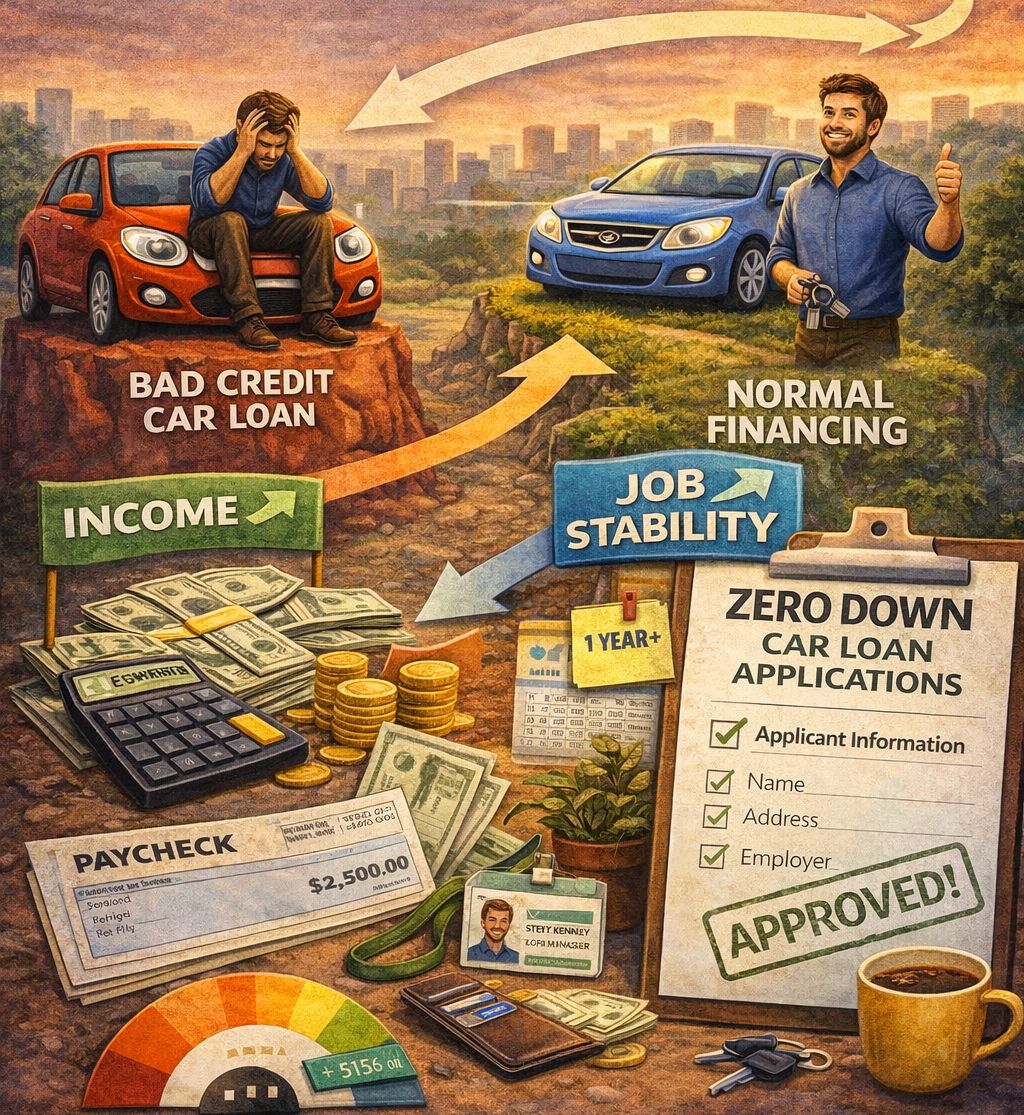
Zero down car loans can sound like the perfect solution when savings are limited. But if you’re applying with bad credit, approval depends heavily on one thing: stability. Lenders take on more risk when there’s no down payment involved, so your income and employment history become even more important. If you’re rebuilding credit or applying with limited cash upfront, understanding how lenders evaluate job stability can significantly improve your chances.
Why Zero Down Applications Face Extra Scrutiny
When you make a down payment, you immediately reduce the lender’s risk. You lower the loan balance and show financial commitment.
With a zero down application, that safety cushion disappears. If the borrower defaults early, the lender has less protection.
That’s why income consistency and employment history often carry more weight than your credit score alone.
How Lenders Evaluate Income
Income isn’t just about how much you earn—it’s about how predictable it is.
Gross vs. Net Income
Lenders usually review gross (pre-tax) income first. But they also consider whether your take-home pay realistically supports the proposed monthly payment, insurance, and living expenses.
If your debt-to-income ratio is too high, approval becomes more difficult—especially without a down payment to offset risk.
Proof of Income
Most lenders require documentation such as:
- Recent pay stubs
- Bank statements
- Direct deposit verification
Self-employed applicants may need additional documentation to demonstrate steady earnings.
The more consistent your income appears, the stronger your application becomes.
Why Job Stability Matters So Much
With zero down financing, lenders look closely at how long you’ve been with your current employer.
Length of Employment
Many lenders prefer to see at least:
- 6 months on the current job
- Or 2 years of consistent employment history in the same field
Frequent job changes don’t automatically mean denial. But unexplained gaps in employment can raise concerns about repayment stability.
Industry Consistency
If you changed jobs but stayed within the same industry or position type, lenders may view that more favorably than switching fields entirely.
For example, moving from one warehouse job to another is less concerning than shifting from full-time employment to temporary gig work with unpredictable hours.
What If You Just Started a New Job?
Starting a new job isn’t a deal-breaker—but timing matters.
If you recently switched employers:
- Provide proof of full-time status
- Show a stable pay structure (not probation-based income)
- Document prior work history in the same field
If you moved for a higher-paying opportunity, that may actually strengthen your profile—even if you’re new to the company.
The key is showing forward financial momentum.
Self-Employed or Gig Income: Extra Steps
Self-employed borrowers and gig workers can qualify for zero down car loans—but documentation becomes critical.
Lenders may request:
- Several months of bank statements
- Profit and loss statements
- Tax returns
Irregular income patterns can make zero down approval harder, since lenders prefer predictable monthly earnings. Saving even a modest down payment may significantly improve flexibility if income fluctuates.
Why Income Stability Often Outweighs Credit Score
In some zero down situations, a borrower with moderate credit but strong employment history may have better approval odds than someone with slightly higher credit but unstable income.
Lenders finance vehicles based on risk assessment. Predictable income lowers risk more effectively than minor score improvements.
That’s why focusing on employment consistency before applying can make a noticeable difference.
Strengthening a Zero Down Application
If you’re planning to apply with zero down, consider preparing in advance:
- Stay at your current job if possible before applying
- Avoid major employment gaps
- Keep bank accounts in good standing
- Reduce revolving debt to improve your debt-to-income ratio
- Maintain on-time bill payments
Even small improvements can tilt a lender’s decision in your favor.
When Zero Down May Not Be the Best Option
While zero down sounds appealing, it may increase long-term loan costs. Without upfront equity, you may start the loan close to—or in—negative equity territory.
If you can save even a small down payment, it often improves approval chances, lowers risk, and may reduce your interest rate.
Zero down works best for applicants with strong, stable income and predictable employment—not unstable financial situations.
The Bottom Line
For borrowers with bad credit, income and job stability can carry more influence than the credit score itself—especially on zero down applications.
Lenders want reassurance that you can handle the payment consistently over time. Stable employment, documented income, and manageable debt levels create that reassurance.
If you’re serious about qualifying without a down payment, your employment history is your strongest asset. Protect it, document it, and present it clearly when applying.