
Questions Before Signing a Bad Credit Car Loan
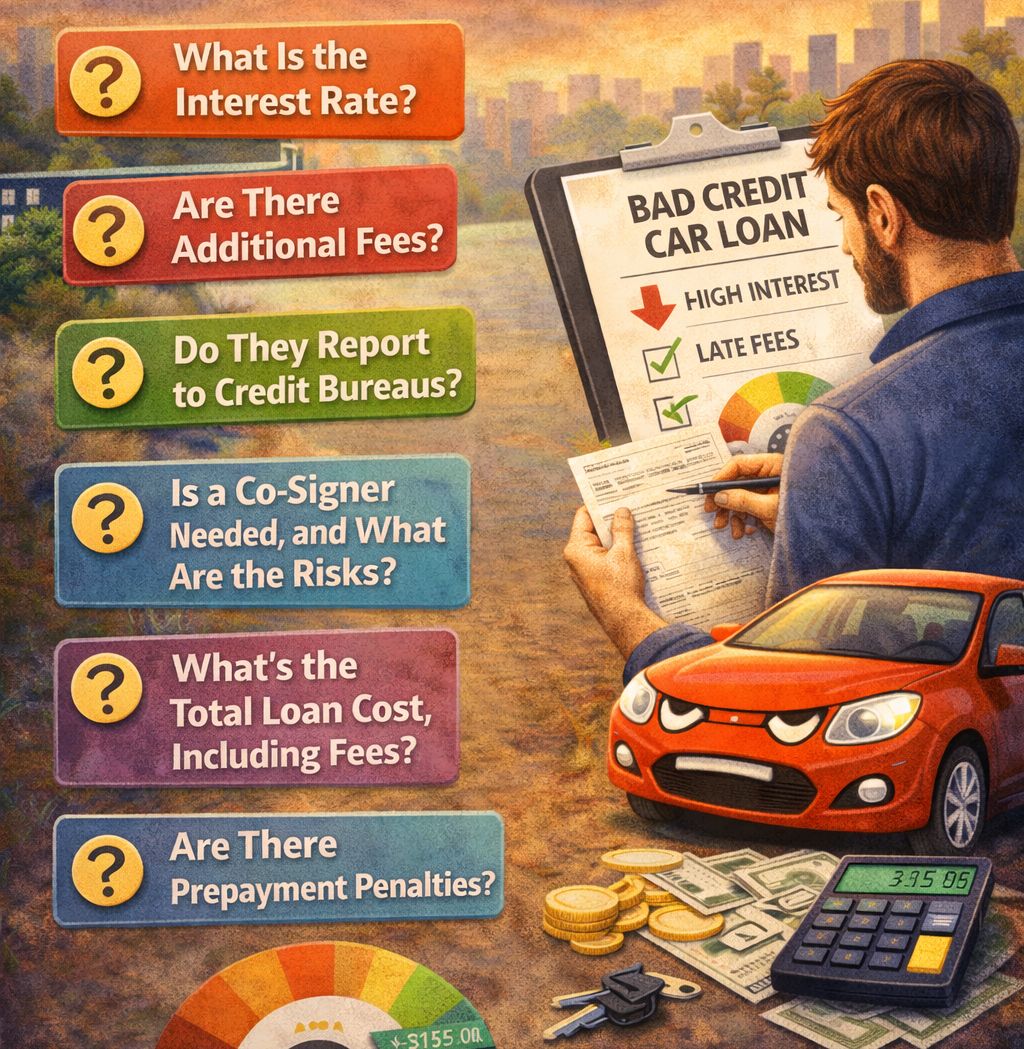
Signing a car loan agreement is a big financial commitment—especially if you’re financing with bad credit. When approval feels like a relief, it’s easy to rush through paperwork without asking the right questions. But the details inside that contract determine how much you’ll actually pay over time. If you’re rebuilding credit or buying your first vehicle, slowing down and getting clear answers can protect you from costly surprises. Here are the most important questions to ask before you sign.
1. What Is the Full Interest Rate (APR)?
Don’t just ask about the monthly payment. Ask for the Annual Percentage Rate (APR).
The APR reflects the true cost of borrowing, including interest and certain fees. A lower payment spread over a longer term might look affordable—but could cost thousands more in total interest.
Understanding the APR helps you compare offers accurately and avoid focusing only on the payment amount.
2. What Is the Total Cost of the Loan?
Ask to see the full repayment amount over the life of the loan.
For example:
- Loan amount: $18,000
- Total paid over 72 months: $27,000
That difference matters. Seeing the total cost makes the long-term impact real and measurable. It also helps you evaluate whether refinancing later should be part of your plan.
3. How Long Is the Loan Term?
Longer loan terms (like 72–84 months) reduce monthly payments but increase total interest paid. They also keep you in the loan longer, which can increase the chance of negative equity.
Ask yourself:
- Does this term fit my long-term goals?
- Will the car likely last the full length of the loan?
Shorter terms typically cost less overall, even if the payment is slightly higher.
4. Are There Prepayment Penalties?
If you improve your credit and want to refinance later—or plan to pay off the loan early—you need to know whether there’s a prepayment penalty.
Most auto loans do not include them, but confirmation is critical. You don’t want to face unexpected fees for trying to save money later.
5. Is There a Grace Period for Late Payments?
Life happens. Understanding how your lender handles late payments can help you prepare.
Ask:
- How many days before a late fee applies?
- When is a payment reported late to credit bureaus?
- Are payment extensions or deferments ever available?
Knowing the policy in advance prevents panic if you face a temporary hardship.
6. Is GAP Coverage Included or Optional?
If you’re putting little or no money down, ask whether GAP (Guaranteed Asset Protection) coverage is included.
GAP helps cover the difference between what you owe and the car’s value if it’s totaled. This can be especially important for borrowers who may be upside down early in the loan.
Understand the cost and whether it’s financed into the loan.
7. What Fees Are Being Added to the Loan?
Review the breakdown carefully. Ask about:
- Documentation fees
- Extended warranties
- Add-ons or service contracts
- Dealer-installed products
Some add-ons are optional. Make sure you understand which items are required and which are not. Financing extras increases your total loan amount and interest paid.
8. What Is My Down Payment Doing?
Ask how your down payment is being applied.
Is it reducing the vehicle price? Covering fees? Offsetting negative equity?
Your down payment should strengthen your position, not disappear into unclear charges.
9. What Happens If I Want to Refinance Later?
Even if you plan to keep the loan short-term, ask about title release procedures and payoff instructions.
Understanding how refinancing works with your current lender makes the transition smoother if your credit improves in the future.
10. Is This Payment Truly Affordable?
Before signing, take a step back.
Don’t base affordability on whether you can make the payment. Base it on whether you can make it comfortably while handling insurance, maintenance, fuel, and unexpected expenses.
Financial breathing room protects you more than stretching for approval ever will.
Why Asking Questions Strengthens Your Position
When financing with bad credit, it’s common to feel like you have to accept whatever is offered. That mindset can lead to regret later.
Asking questions doesn’t jeopardize your approval. It shows responsibility. Lenders expect borrowers to understand what they’re signing.
Clarity reduces stress—and smart decisions today create better refinancing options tomorrow.
Final Thought
A bad credit car loan can be a rebuilding tool if structured correctly. The contract you sign shapes your financial path for years.
Before you commit, pause. Ask clear, direct questions. Understand every number on the page. Informed decisions protect your credit, your budget, and your future borrowing power.