
Pick the Right Car for Zero Down Financing
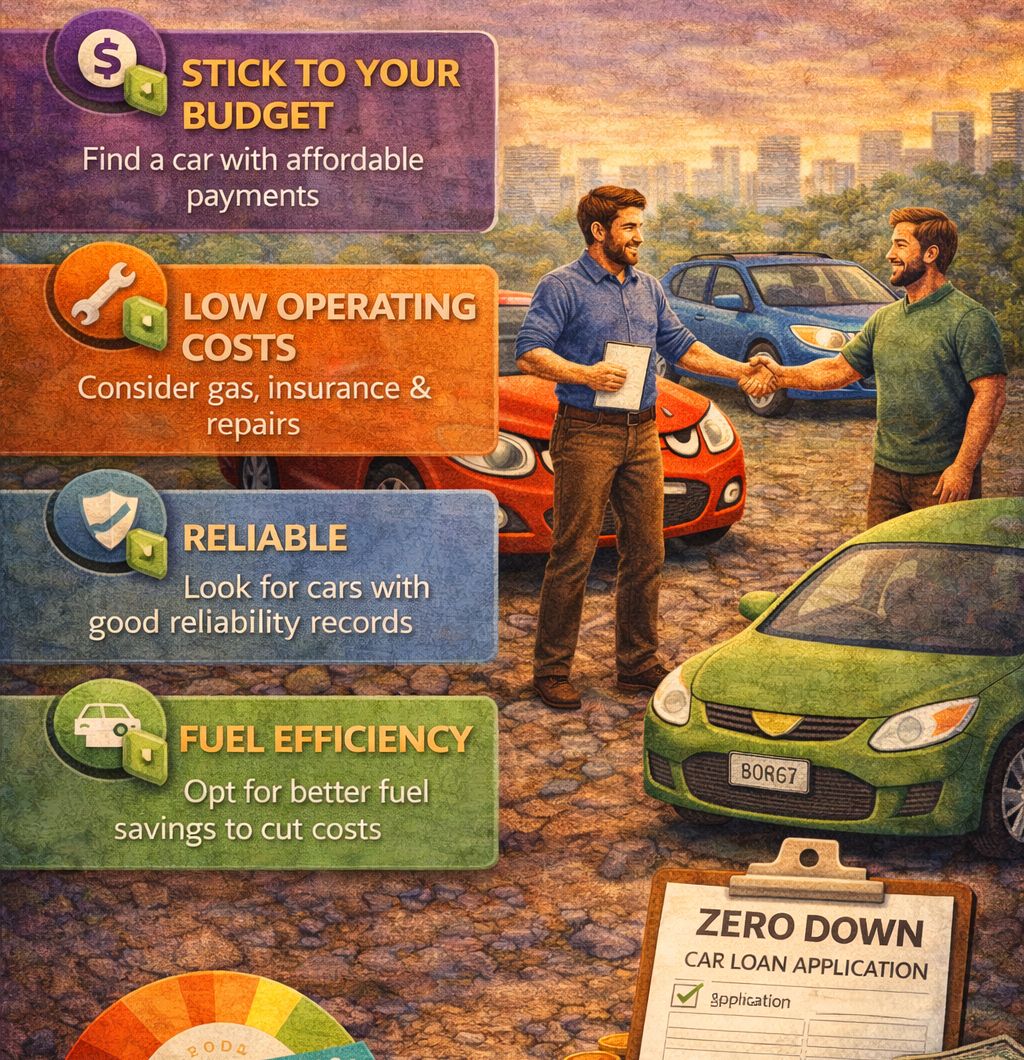
Zero down financing can help you get into a vehicle quickly—but the car you choose matters more than ever. Without a down payment, you’re financing the full purchase price, which increases your long-term cost and risk. Picking the wrong vehicle can lead to negative equity, high payments, and financial stress. The right vehicle, on the other hand, can make your zero down loan manageable and even help you rebuild credit. Here’s how to choose wisely.
Start with Your Budget—Not the Car
Before browsing listings, determine what monthly payment comfortably fits your budget.
Be realistic. Include:
- Insurance costs
- Fuel expenses
- Maintenance
- Registration fees
A payment that looks manageable on paper can quickly become stressful when real-world expenses stack up.
Zero down financing often means a higher loan balance. That makes staying within your payment comfort zone even more important.
Focus on Total Cost, Not Just Monthly Payment
It’s easy to get distracted by the advertised monthly payment. But with zero down, the total amount financed directly affects long-term costs.
Ask yourself:
- What is the total loan amount?
- How much interest will I pay over the full term?
- How long is the loan?
Choosing a slightly less expensive vehicle can lower both your payment and your total interest burden significantly.
Choose Reliability Over Flash
With zero down financing, your priority should be reliability—not luxury.
A dependable vehicle:
- Reduces repair risk
- Protects your budget
- Helps ensure consistent payments
Unexpected repair bills can cause financial strain, especially early in a loan.
Research reliability ratings, ownership costs, and common maintenance issues before deciding. A car that holds up well over time supports your financial stability.
Watch the Vehicle Age and Mileage Limits
Lenders often set age and mileage guidelines for zero down approvals. Extremely old vehicles or high-mileage cars may not qualify.
Additionally, older vehicles can depreciate differently and may present higher maintenance risks.
Look for a balance:
- Affordable price
- Reasonable mileage
- Strong reliability history
This increases approval odds and reduces long-term ownership stress.
Consider Depreciation and Equity
Without a down payment, you’re more likely to start with little or no equity.
Vehicles that depreciate rapidly can keep you upside down longer.
Generally, moderately priced, well-known models with steady resale values may help you build equity faster compared to higher-priced or specialty vehicles.
The goal is to reduce your exposure to negative equity, especially in the first two years.
Avoid Financing Add-Ons You Don’t Need
When financing zero down, every extra dollar increases your principal balance and total interest.
Be cautious with:
- Extended warranties
- Dealer add-ons
- Cosmetic upgrades
- Service packages
Some protections may make sense, but ensure you understand the cost and whether they’re necessary.
Lower financing amounts equal lower long-term risk.
Think Ahead to Refinancing
If your goal is to refinance after 12–24 months of on-time payments, choose a car that supports that plan.
Refinancing eligibility often depends on:
- Remaining loan balance
- Vehicle value
- Age and mileage
Picking a vehicle with stable value and manageable pricing makes refinancing more realistic later.
Your choice today affects your flexibility tomorrow.
Match the Vehicle to Your Lifestyle
Beyond finances, consider daily needs:
- Commute distance
- Family size
- Cargo needs
- Weather conditions
Choosing a vehicle that genuinely fits your lifestyle reduces the temptation to trade in early—something that can be costly with zero down financing.
Keeping the car long enough to build equity strengthens your overall loan strategy.
When to Consider Waiting
If the only vehicles within approval range stretch your budget too thin, it may be wise to:
- Save for a small down payment
- Improve your credit further
- Reduce existing debt
Waiting a few months can open up better vehicle options and stronger loan terms.
Zero down should be financially sustainable—not just convenient.
The Bottom Line
Picking the right car for zero down financing isn’t about finding the newest or most exciting option. It’s about selecting a reliable, affordable vehicle that fits your budget and long-term goals.
Focus on total cost, reliability, and equity potential. Avoid unnecessary add-ons. Think ahead to refinancing.
With the right vehicle choice, zero down financing can be a stepping stone toward stronger credit and greater financial stability—not a burden.