
How Add-Ons Quietly Raise the Cost of Zero Down Deals
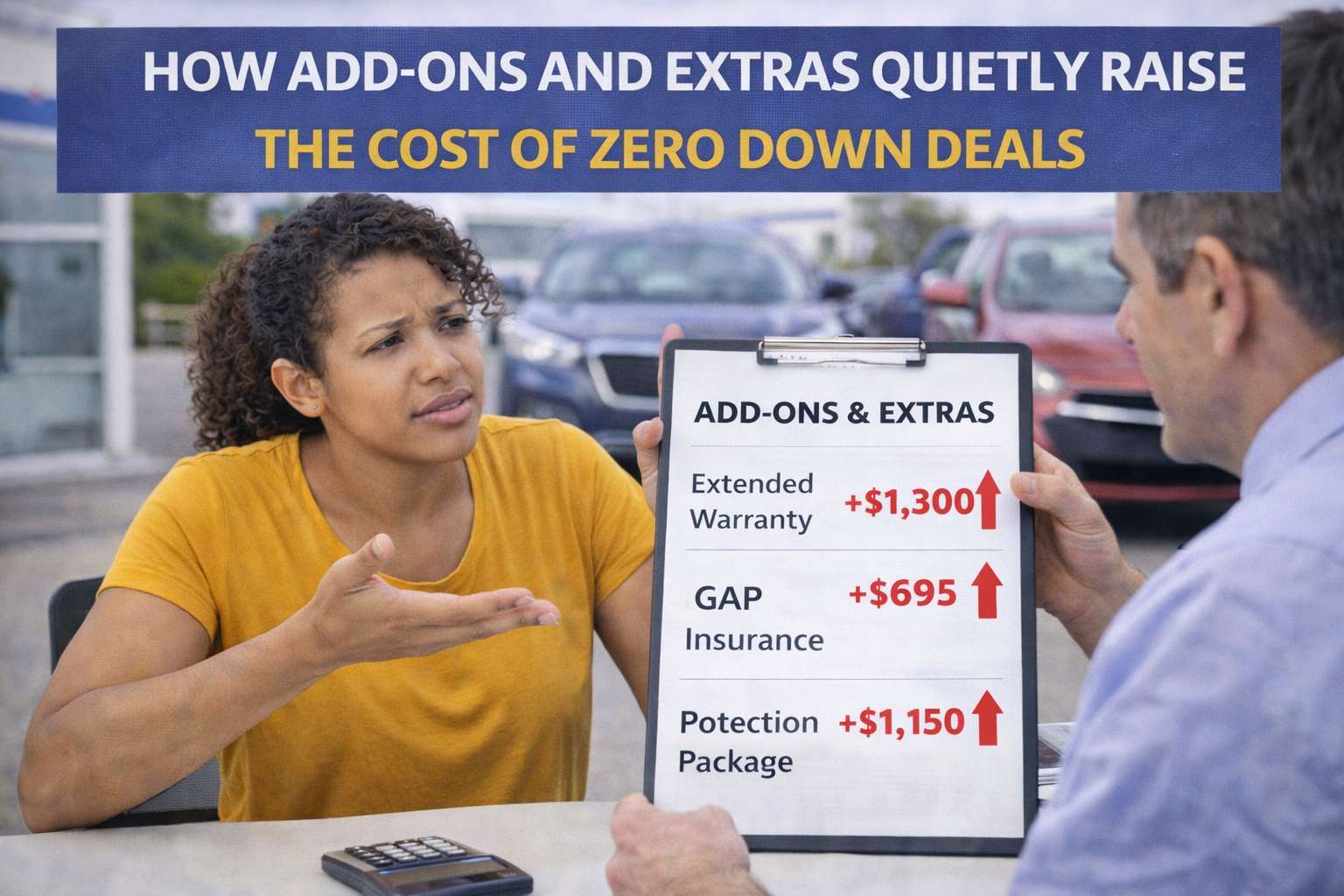
Zero down car deals often focus on one thing: getting you approved without upfront cash. What’s easy to miss is how quickly the total cost can grow once add-ons and extras are included in the loan. These additions may feel small at the time of signing, but they compound interest and increase negative equity over years. For buyers with bad or rebuilding credit, that extra cost can make an already sensitive loan much harder to manage. This guide explains how add-ons quietly raise the cost of zero down deals—and how to spot the difference between protection and unnecessary expense.
What Counts as Add-Ons and Extras
Add-ons are optional products or services that are included in your loan instead of being paid upfront.
They can range from protection-related items to convenience features. The key issue isn’t whether they exist—it’s how they’re financed.
Why Add-Ons Matter More in Zero Down Loans
With zero down, the loan already starts at a high balance. Every extra dollar added:
- Increases the loan amount
- Accrues interest over the full loan term
- Extends negative equity
Unlike cash purchases, financed add-ons cost far more over time.
Small Monthly Increases Hide Big Long-Term Costs
Add-ons often add only a small amount to the monthly payment. That makes them feel harmless at signing.
What’s often overlooked is the total interest paid on those extras over several years—especially with higher interest rates.
How Add-Ons Affect Negative Equity
Negative equity happens when the loan balance exceeds the vehicle’s value. Add-ons worsen this by increasing the balance without increasing resale value.
If the vehicle is sold or traded early, add-ons usually don’t transfer in value—but their balance remains.
Common Types of Add-Ons to Review Carefully
Protection-related extras
Some add-ons are designed to protect against specific risks. While useful in some situations, they should be evaluated based on actual need—not fear.
Appearance or convenience extras
Items that improve appearance or convenience rarely add resale value. When financed, they increase cost without improving flexibility.
Why Bad Credit Buyers Feel the Impact More
Bad credit loans often involve higher interest and longer terms. That combination magnifies the cost of every extra dollar borrowed.
An add-on that seems minor can quietly add hundreds—or more—to total loan cost.
Add-Ons and Loan Approval Pressure
Add-ons are sometimes presented during fast-paced signing moments. Buyers focused on approval may agree without fully reviewing the numbers.
Once signed, those costs are locked into the loan and difficult to remove.
Separating Protection From Pressure
Not all add-ons are unnecessary but not all are needed.
A helpful question to ask is: Does this protect me from a realistic risk, or does it simply increase the loan size?
Why Paying Cash (When Possible) Changes the Math
Paying cash for optional items avoids interest entirely.
If an add-on is truly valuable, paying upfront—when possible—keeps it from inflating the loan balance and negative equity.
How to Spot Add-On Red Flags
Be cautious if:
- The total loan amount jumps unexpectedly
- Monthly payments increase without a clear explanation
- Add-ons are framed as “required” without explanation
- You feel rushed during final paperwork
Clarity should always come before commitment.
The Compounding Effect Over Long Loan Terms
With long zero down loans, add-ons compound cost the longest.
Interest accrues year after year, while the add-on itself provides no resale benefit. This imbalance is what makes them so expensive over time.
Reducing Risk Without Eliminating Protection
The safest approach is balance:
- Prioritize affordability first
- Limit extras to what genuinely fits your situation
- Avoid rolling convenience items into long loans
Protection should reduce stress—not create it later.
Why Less Often Means More
A simpler loan is usually a safer loan. Fewer extras mean:
- Lower loan balance
- Faster equity growth
- Better flexibility later
Zero down loans already start at a disadvantage. Keeping them lean helps offset that risk.
Long-Term Cost Is the Real Price Tag
The true cost of add-ons isn’t what they add today—it’s what they cost over the full loan.
Understanding how extras quietly raise that cost gives you the power to choose protection wisely and avoid unnecessary financial drag.