
How Lenders Approve Car Loans with Low Credit Scores
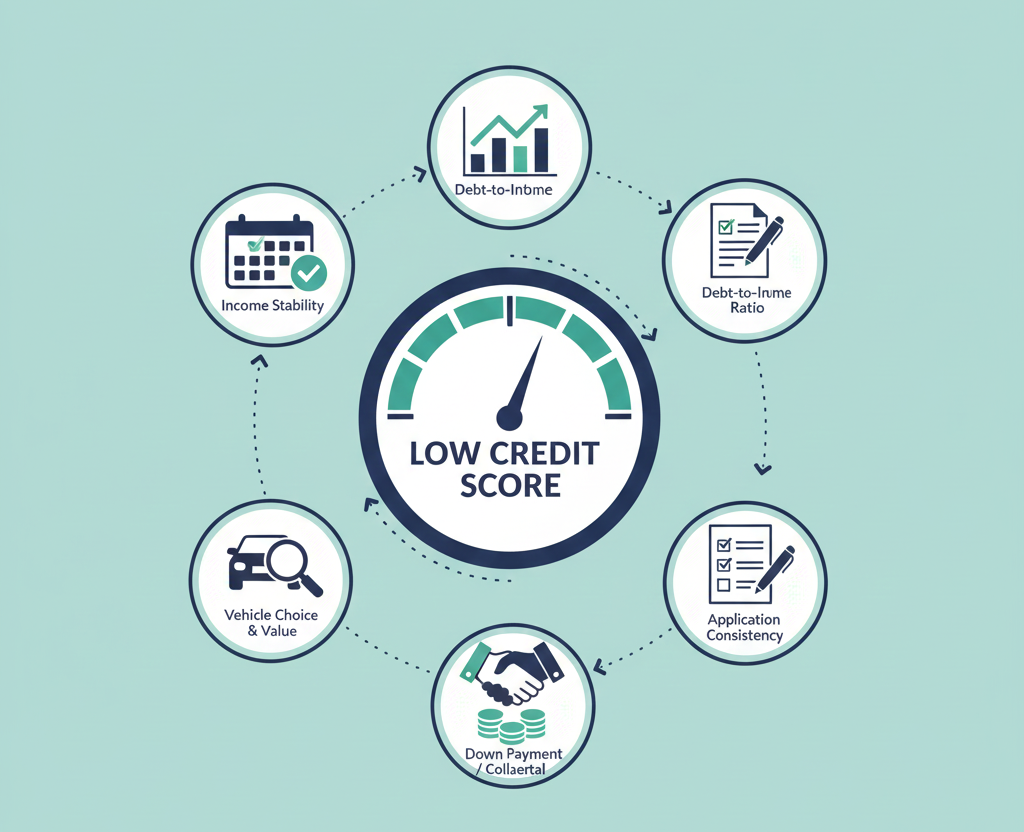
When your credit score is low, every application can feel like a gamble. You hit “submit” and then wait, hoping the lender sees more than just a number on a screen. What you don’t see is the process happening in the background: underwriters weighing your income, debts, job history and the car itself to decide whether a loan feels safe. Once you understand how that decision really works, the whole process becomes less mysterious—and easier to prepare for. In this guide, you’ll see how lenders think about risk, which parts of your profile matter most, and what you can do before you apply to give them as many reasons as possible to say yes.
The Big Picture: Lenders Are Assessing Risk, Not Judging You
A lender’s job is simple on paper: “Can this person realistically pay us back on time?”
Your credit score is a quick starting point, but it doesn’t tell the whole story. With a low score, lenders move past the headline number and dig into:
- Your recent behaviour with credit
- How stable your income and job look
- How much of your income is already tied up in other debts
- Whether the car and loan size match your situation
The more pieces of your profile fit together, the more comfortable they feel approving you—even with a weaker score.
If you’re still learning the basics, you can also read Bad Credit Car Loans: Beginner’s Guide to How They Work and What Credit Score Is Needed for a Bad Credit Car Loan? as companion articles.
Step 1: Looking at Your Credit Story, Not Just the Score
When an underwriter opens your file, they don’t just see a number; they see a timeline.
They ask questions like:
- Are the problems recent or mostly in the past?
- A low score with no new late payments for a year looks better than one with fresh issues.
- What types of problems are there?
- A single old missed payment is different from a recent repossession or multiple unpaid loans.
- Is anything improving?
- Lower card balances, fewer new accounts and a stretch of on-time payments can all be positive signs.
This is why two people with the same score can receive very different answers. The one with an improving pattern often looks safer than the one whose issues are getting worse.
Step 2: Checking Income and Job Stability
Next, lenders look at how money flows into your life.
They want to see:
- Enough income to handle your existing bills and a car payment
- Consistency – similar amounts arriving on a regular schedule
- Stability – not jumping from job to job every few weeks
They’ll usually confirm this through:
- Recent pay stubs
- Bank statements showing deposits
- For self-employed or gig workers, invoices or business records
If your score is low but your income picture is strong, you’re already helping your case. This connects closely with the ideas in Minimum Requirements for a Bad Credit Car Loan (Income, Documents, Debt), where income is one of the core building blocks.
Step 3: Evaluating Your Debt Load and Obligations
Now they look at how money flows out of your life.
Key questions are:
- How much are you already paying toward loans, cards, and other credit each month?
- After those payments, is there enough left to safely cover a car payment?
They combine your:
- Current debt payments
- Proposed car payment
- Monthly income
…to get a sense of whether your budget is too tight. This is where your debt-to-income ratio quietly decides a lot about car loan approval when your credit score is low.
If your debts already take a big slice of your income, a lender might:
- Offer a smaller loan
- Suggest a longer term (within reason)
- Or decide it’s safer to wait until you’ve paid some balances down
Step 4: Matching You to the Right Car and Loan Size
Lenders also ask: “Does this car fit this person’s situation?”
They weigh:
- Vehicle price – Is the car modest or very high-priced compared to your income?
- Age and mileage – Some lenders avoid very old or high-mileage vehicles.
- Loan-to-value ratio – Are you trying to borrow more than the car is reasonably worth?
A lower-priced, reliable car looks safer than a luxury model stretched over a long term. Even with the same score, a borrower asking for less tends to look more responsible.
This is why learning How Much Car You Can Afford with Bad Credit can be more powerful than trying to push your limit as far as possible.
Step 5: Reviewing Your Documents for Consistency
Once they like the general picture, lenders check whether your documents and application line up.
They’ll compare:
- Name and address on your ID vs the application
- Income details on your pay stubs vs what you wrote down
- Bank deposits vs claimed earnings
They’re not looking for perfection—they’re looking for honesty and consistency. If details don’t match, it can raise questions or slow everything down, even if your score and income would normally be fine.
Step 6: Weighing Compensating Factors
When your credit score is low, lenders look for compensating factors—positives that help balance the risk:
Examples include:
- A small down payment or a reasonable trade-in
- A history of staying in the same job or line of work
- Recent progress, like paying down a card or closing an old overdue account
- Choosing a simple, sensible car instead of stretching for something bigger
You don’t need all of these, but the more you have, the easier it is for an underwriter to justify approval.
Step 7: Final Decision: Approve, Approve with Conditions, or Decline
After weighing all of this, lenders usually land in one of three buckets:
- Approve
- Your profile fits their comfort zone, even with a low score.
- Approve with conditions
- They may ask for a smaller loan amount, a bit of money down, or a specific type of car.
- Decline (for now)
- Your current mix of score, income, debt and vehicle choice feels too risky.
A decline doesn’t mean you’ll never qualify. It usually means something important in your profile needs attention first—debt, income, or your car expectations.
How You Can Influence the Decision Before You Apply
You can’t control how lenders set their policies, but you can control what your file looks like when they see it.
Before you apply, try to:
- Choose a realistic car price that fits a safe payment
- Tidy up small overdue balances if possible
- Make sure your documents are up to date and easy to read
- Keep new credit applications to a minimum
- Be ready to explain your situation calmly and honestly
Combined with the ideas in How to Get a Car Loan with Bad Credit Step by Step, this puts you in the best position for approval—without guessing what’s happening on the lender’s side.