
End a Bad Credit Car Loan & Get Better Terms
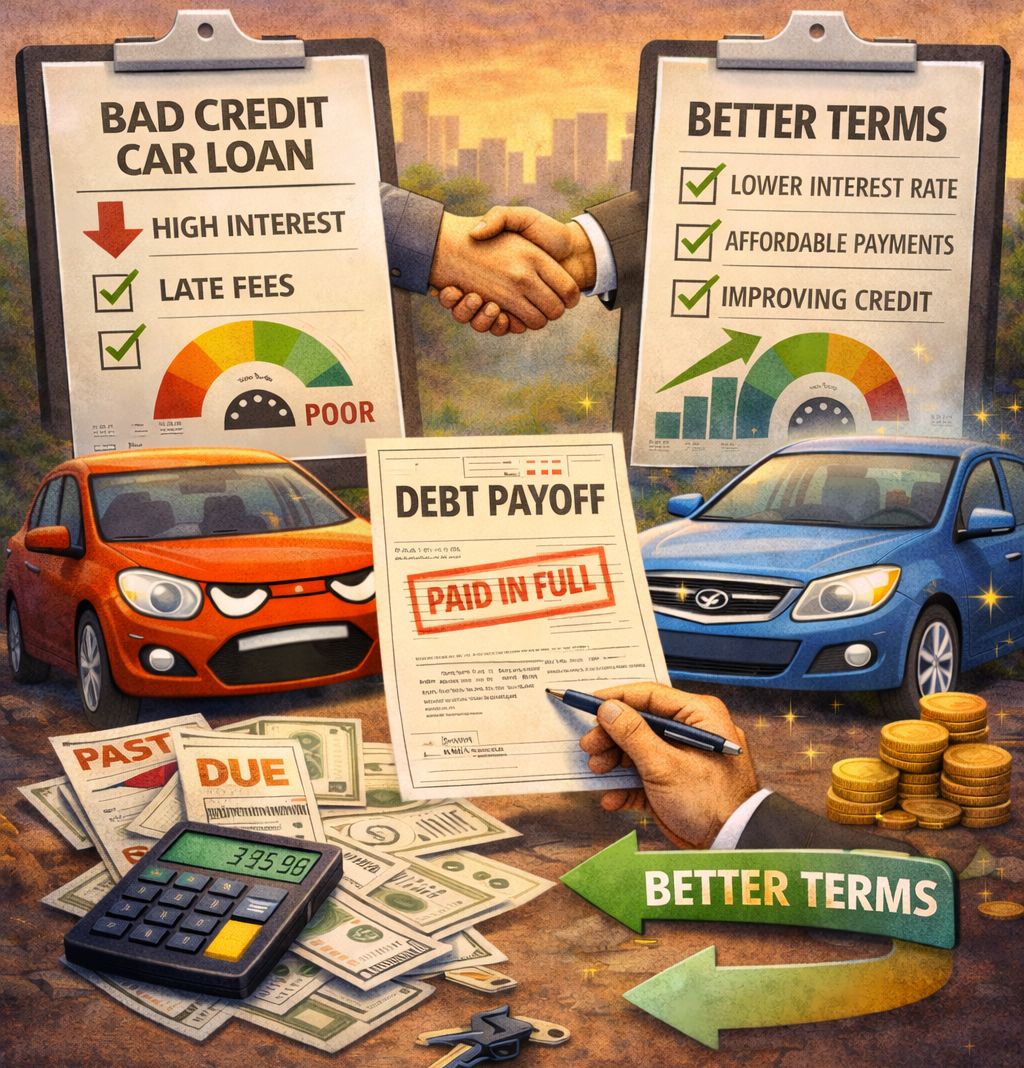
If you’re stuck in a high-interest auto loan, you may be wondering how to end a bad credit car loan safely without damaging your credit further. Many buyers accept tough terms just to get approved, but those terms don’t have to last forever. The key is knowing which exit strategies protect your finances—and which ones create bigger problems. With the right approach, you can transition into better loan terms and regain control. Here’s how to do it the smart way.
Understand What “Ending” Your Loan Really Means
Ending a bad credit car loan doesn’t mean walking away from it. That approach leads to repossession and long-term credit damage.
Instead, “ending” the loan safely usually means one of three things:
- Refinancing into better terms
- Paying off the loan early
- Trading or selling the vehicle strategically
Each option depends on your current financial position—not just your frustration with the rate.
Option 1: Refinance Into a Lower Rate
Refinancing replaces your existing loan with a new one—ideally at a lower interest rate or more affordable monthly payment.
When Refinancing Makes Sense
Refinancing is most realistic if:
- You’ve made 6–12 months of consistent on-time payments
- Your credit score has improved
- Your income is stable
- You’re not heavily upside down on the loan
Even a 3–5% drop in interest can reduce total cost significantly over time.
Watch the Loan Term
Some lenders lower payments by extending the loan length. While this reduces your monthly bill, it may increase total interest paid. Focus on overall savings—not just the payment amount.
Option 2: Pay Off the Loan Early
If you receive a bonus, tax refund, or increase in income, you may consider accelerating your payoff.
Benefits of Early Payoff
- Eliminates high interest quickly
- Improves your debt-to-income ratio
- Frees up cash flow monthly
- Removes the lender’s lien from your title
Before paying off early, confirm there are no prepayment penalties (most auto loans don’t have them, but verifying is wise).
Consider Your Cash Position
Never drain your emergency savings just to eliminate a car loan. Stability matters more than speed.
Option 3: Sell or Trade the Vehicle Strategically
If your interest rate is extremely high or the vehicle no longer fits your needs, transitioning into a different car may help—if done carefully.
Step 1: Check Your Payoff Amount
Contact your lender to get an accurate payoff figure. This helps you determine whether you have equity or negative equity.
Step 2: Evaluate Vehicle Value
If your car is worth more than what you owe, selling it privately may allow you to fully pay off the loan and start fresh.
If you owe more than the car is worth, you’ll need to cover the difference or roll it into a new loan. Rolling negative equity into another loan can trap you in another high-balance situation—so proceed cautiously.
What You Should Avoid
When trying to end a bad credit car loan, certain actions can create long-term damage.
Avoid Voluntary Surrender as a “Shortcut”
Returning the vehicle may feel like relief, but it severely impacts your credit and can leave you owing a deficiency balance.
Avoid Missing Payments Intentionally
Purposely falling behind to force a change damages your credit and reduces future refinancing chances.
Avoid Quick-Fix Offers
Be cautious of companies promising “instant loan removal” or unrealistic debt elimination claims. Focus on legitimate financial strategies.
Improve Your Position Before Transitioning
Sometimes the smartest move is improving your credit and financial profile before making any changes.
Build a Stronger Payment History
On-time payments over time remain one of the biggest credit score factors. Consistency creates leverage.
Reduce Other Debt
Lowering credit card balances may improve your credit score enough to qualify for better refinance options.
Save for a Down Payment
If you plan to trade or refinance, having cash on hand reduces risk for the next lender and strengthens approval chances.
Timing Matters More Than Emotion
It’s normal to feel frustrated about a high-interest loan. But decisions driven by emotion can lead to bigger setbacks.
Ask yourself:
- Has my credit improved since I financed?
- Can I qualify for significantly better terms now?
- Is my income stable enough for a new commitment?
If the answer to most of those is “yes,” you may be ready to transition. If not, focus on strengthening your position first.
Turning a Tough Start Into a Better Outcome
A bad credit car loan often serves as a stepping stone—not a final destination. With steady payments, improved credit habits, and strategic planning, you can move into better terms safely.
The key is replacing your loan—not escaping it. Careful refinancing, responsible payoff, or strategic selling can shift your financial path without sacrificing your long-term credit health.