
Exit a Zero Down Car Loan Early (Safely)
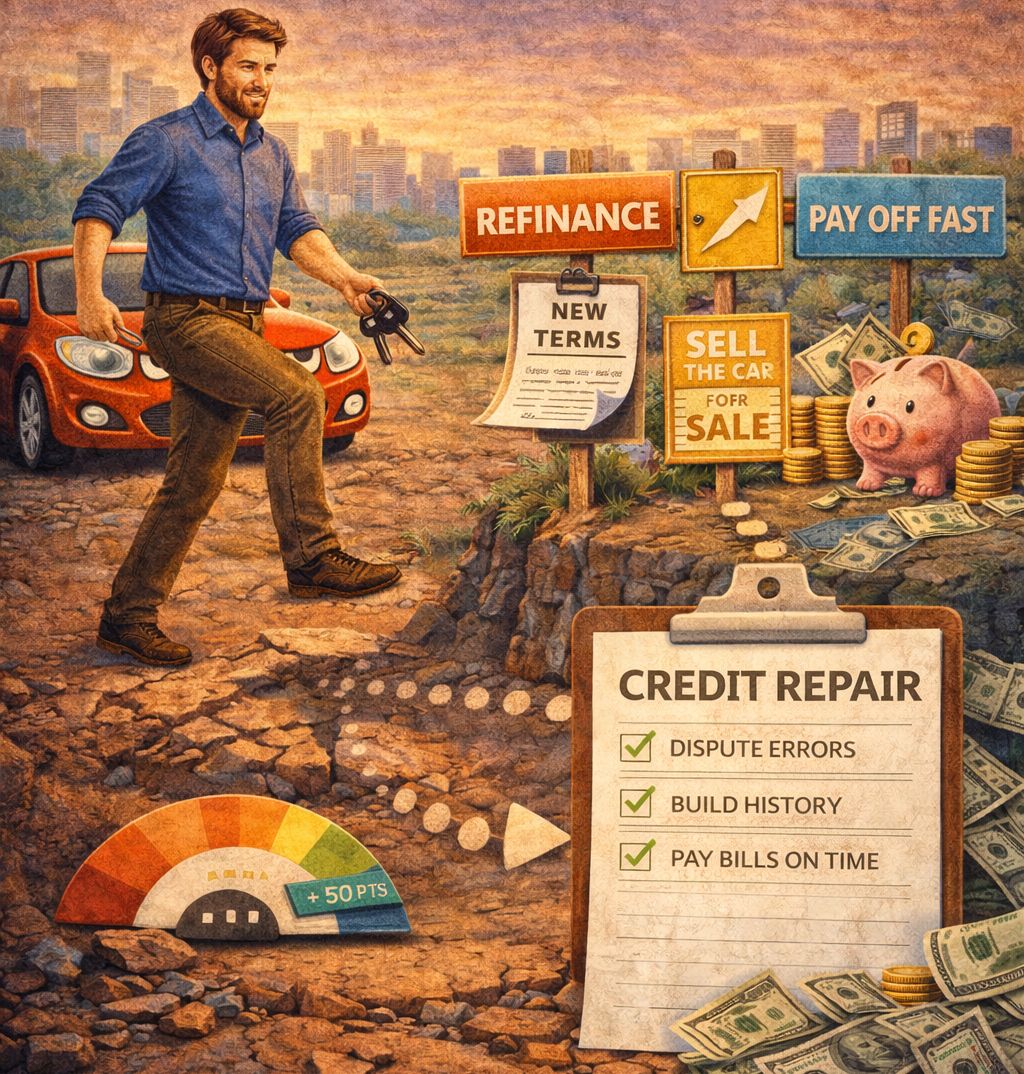
Zero down car loans can solve an immediate need—but sometimes circumstances change. Maybe the payment feels too high, your income shifts, or you realize the loan terms aren’t ideal. The challenge is getting out early without damaging your credit or triggering repossession. If you financed with little or no money down, you may also be dealing with negative equity. Here’s how to exit a zero down car loan the smart way, without creating bigger financial problems.
Step 1: Find Out Exactly What You Owe
Before making any decisions, contact your lender and request your current payoff amount. This number includes:
- Remaining principal
- Accrued interest
- Any applicable fees
Do not rely on your last statement balance. The payoff amount is the only number that matters when exiting a loan.
Next, compare that payoff to your vehicle’s current market value.
Step 2: Determine If You Have Negative Equity
With zero down financing, many borrowers start close to or in negative equity immediately. Because vehicles depreciate quickly, it’s common to owe more than the car is worth in the first few years.
If your payoff amount is:
- Lower than the car’s value → You may have equity.
- Higher than the car’s value → You have negative equity.
Your strategy depends heavily on which situation you’re in.
Option 1: Refinance Into Better Terms
If your credit has improved and you’ve made consistent payments, refinancing may allow you to exit the original high-interest structure while keeping the vehicle.
Refinancing replaces your current loan with a new one—ideally at a lower rate or shorter term.
This option works best when:
- You have at least 6–12 months of on-time payments
- Your debt-to-income ratio has improved
- The negative equity isn’t excessive
Even a modest rate reduction can lower your financial pressure and improve long-term affordability.
Option 2: Sell the Vehicle
If your car’s value is close to your payoff—or higher—you may be able to sell it and pay off the loan entirely.
Private sales often generate more value than dealer trade-ins. However, coordinating payoff and title transfer requires careful handling.
If you have equity, selling can cleanly exit the loan and free you from future payments.
If you have negative equity, you’ll need to cover the difference out of pocket to avoid rolling debt forward.
Option 3: Trade Into a Lower-Cost Vehicle Carefully
Trading into a more affordable vehicle may lower your monthly payment. But be cautious.
If you roll negative equity into the next loan, you increase your starting balance again. This can restart the cycle.
This option only makes sense if:
- The replacement vehicle is significantly less expensive
- The new loan terms are clearly better
- The payment is comfortably affordable
Make sure the total loan amount and long-term cost are fully disclosed before agreeing.
Option 4: Pay Down the Balance Strategically
If you’re not in urgent distress, making extra principal payments can accelerate your ability to exit the loan safely.
Lowering the balance:
- Reduces negative equity
- Improves refinance eligibility
- Creates more flexibility to sell later
Even occasional lump-sum payments (such as tax refunds or bonuses) can help shift your position.
What Not to Do
Don’t Stop Paying
Missing payments to “force” an exit will severely damage your credit. Repossession stays on your credit report for years and makes future financing much harder.
Don’t Choose Voluntary Surrender as a Shortcut
Returning the vehicle still results in a default and may leave you with a deficiency balance.
Don’t Ignore the Loan
Avoidance makes options disappear. Lenders are more flexible when you communicate early.
When an Early Exit Makes Sense
Exiting early may be a smart move if:
- The payment is consistently unmanageable
- The interest rate is extremely high
- Your credit has improved enough to qualify for better terms
- You need to reduce debt to stabilize your finances
However, if your payment fits your budget and you’re rebuilding credit successfully, staying the course may be safer.
Protecting Your Credit During the Process
Regardless of the strategy you choose, your top priority should be maintaining on-time payments until the loan is fully satisfied or replaced.
A clean payment history is what protects your credit score. The exit method matters—but consistency matters more.
The Bottom Line
Exiting a zero down car loan early requires planning, math, and discipline—not emotion. Start by understanding your payoff balance and equity position. From there, refinancing, selling, trading carefully, or accelerating payments may offer a safe path out.
Avoid shortcuts that damage your credit. With the right strategy, you can transition away from a zero down loan without wrecking your financial progress.