
How to Get a Car Loan with Bad Credit (Step by Step)
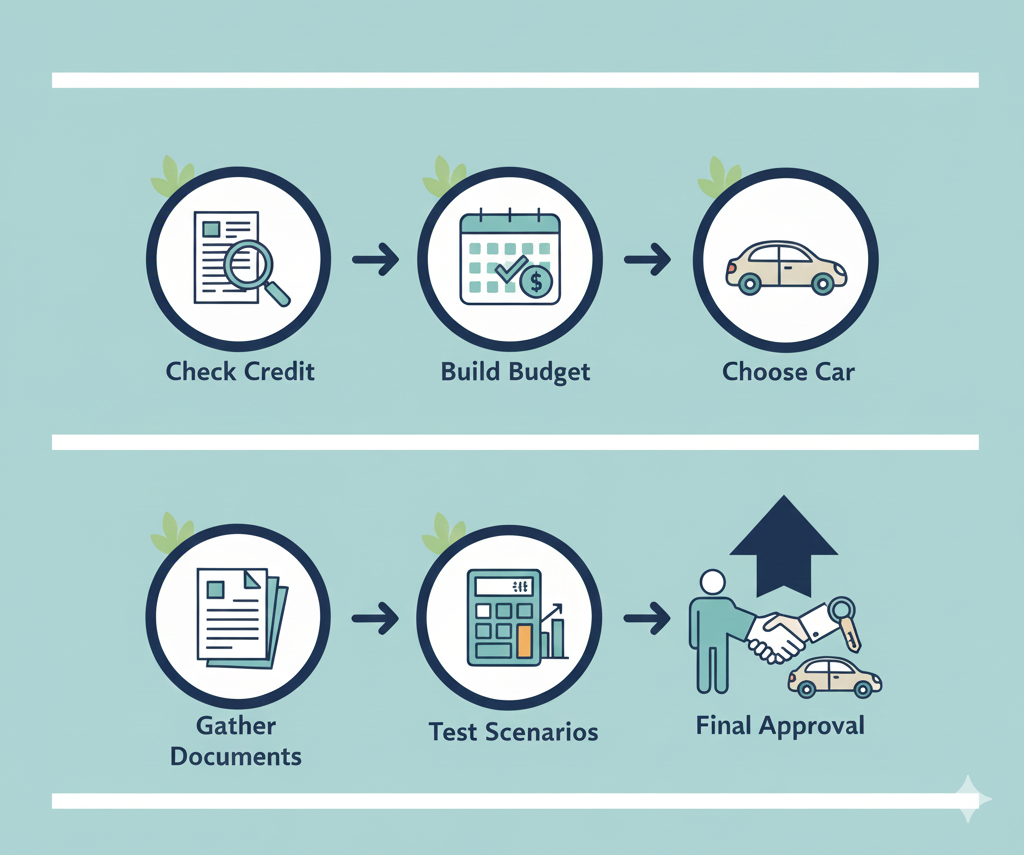
Trying to get a car loan with bad credit can feel like walking into a test you never studied for. You don’t know what lenders expect, which documents matter most, or how to avoid agreeing to something that hurts you later. The good news is that approval isn’t just about your score—it’s about how you prepare and the choices you make along the way. This step-by-step guide breaks the process into simple actions you can follow in order. By the end, you’ll know exactly what to do before you apply, what to say when you’re in front of a lender, and how to pick a loan that works for your real budget.
Step 1: Understand What You’re Applying For
Before you do anything else, be clear on what you’re getting into:
- A car loan is a fixed monthly commitment for several years.
- The lender uses your car as security—if you stop paying, they can take it back.
- With bad credit, interest rates are usually higher and rules are tighter.
If you still feel fuzzy on the basics, it can help to read something like Bad Credit Car Loans: Beginner’s Guide to How They Work first, then come back to this step-by-step plan.
Step 2: Check Your Credit and Clean Up Easy Issues
You don’t need a perfect score, but you do need to know where you stand.
- Get your latest credit report and score.
- Look for errors, such as accounts that aren’t yours or wrong late-payment dates.
- Dispute obvious mistakes with the credit bureaus.
Then, fix a few quick wins if you can:
- Pay any small overdue amounts that are dragging you down.
- Try to bring credit card balances a bit lower than usual.
This doesn’t transform your credit overnight, but it shows lenders you’re moving in the right direction.
Step 3: Build a Realistic Car Budget
Instead of starting with the car you want, start with the payment you can live with.
Ask yourself:
- How much can I safely spare each month after rent, food, and essentials?
- Do I have room in that number for fuel, insurance, and basic maintenance?
A simple approach:
- Write down your monthly income after tax.
- List your fixed bills and minimum debt payments.
- Decide on a maximum car payment that still leaves breathing room.
This number becomes your anchor. You’ll use it in the next steps when you try different loan amounts and terms.
Step 4: Choose the Right Kind of Car for Your Situation
With bad credit, the car you choose can help or hurt your approval.
Aim for:
- A modest price – not the top trim, not a luxury badge.
- Good reliability history – so repairs don’t wreck your budget.
- Reasonable age and mileage – lenders often prefer newer, reliable used cars over very old ones.
Remember: a slightly less exciting car that fits your budget now can help you qualify for a better car later, once your credit improves.
Step 5: Gather Your Documents Before You Apply
Lenders want to see stability. Preparing your paperwork in advance makes you look organised and serious.
Commonly requested documents include:
- Recent pay stubs or income proof
- Bank statements
- A government-issued ID
- Proof of address (utility bill, lease, etc.)
- Information about any other loans or obligations
Having this ready reduces back-and-forth and can speed up approval.
Step 6: Use a Car Loan Calculator to Test Scenarios
Before anyone runs your credit, test numbers on your own.
- Plug in the car price, a possible down payment, and a rough interest rate that’s realistic for bad credit.
- Adjust the loan term until the payment lines up with the budget you set in Step 3.
You’re not trying to predict the exact payment—just to see:
- What price range is even close to affordable
- How much a small down payment or shorter term changes your monthly cost
This step makes your later conversations with lenders much more confident.
Step 7: Apply with the Right Kind of Lender
Not every lender handles bad credit in the same way. You might consider:
- Dealers that work with multiple subprime lenders
- Finance companies that specialise in bad or limited credit
- Online pre-qualification tools that show ranges without a full commitment
Start with one or two options, not ten. You want to:
- Limit unnecessary hard checks
- Compare a small handful of real offers instead of dozens of vague promises
Be honest about your situation and let them know you’re focused on a payment that fits your budget, not just on getting the biggest car possible.
Step 8: Compare Offers Carefully, Not Just the Monthly Payment
When offers come back, look beyond “Can I make this payment?”
Compare:
- Interest rate (APR) – lower is better, even if the payment is similar.
- Loan term – shorter usually means less total interest.
- Total amount financed – including fees and add-ons.
- Conditions – mileage limits, required insurance, or add-ons you didn’t ask for.
It may help to write numbers from each offer into a simple table. That makes it easier to see which loan really costs less over time, not just this month.
Step 9: Negotiate the Car Price and the Loan Separately
A common mistake is letting everything blend together:
- Price of the car
- Trade-in value
- Loan terms
- Add-ons and extras
Try to:
- Negotiate the car price first, as if you were paying cash.
- Only then, talk about your financing options.
This helps prevent the dealer from hiding a high rate or extra products behind a “comfortable” payment.
Step 10: Final Check Before You Sign
Before you sign the contract, pause and double-check:
- Is the monthly payment still inside the safe range you set earlier?
- Does the total amount financed match what you agreed to?
- Are there any fees, protections or add-ons you didn’t clearly agree to?
If anything looks confusing, ask for it to be explained in plain language. If it doesn’t feel right, you’re allowed to walk away. Another lender or another car might fit you better.
Life After Approval: Protecting Your Progress
Approval is not the end of the journey—it’s the start.
To protect your progress:
- Set up reminders or automatic payments so you never miss a due date.
- Build a small emergency buffer for repairs or surprises.
- Review your loan after 12–24 months to see if you’re in a position to refinance or upgrade.
Used wisely, this one loan can be a key part of a bigger plan to move from bad credit to normal, sustainable borrowing.