
How Voluntary Surrender Affects Future Car Loans
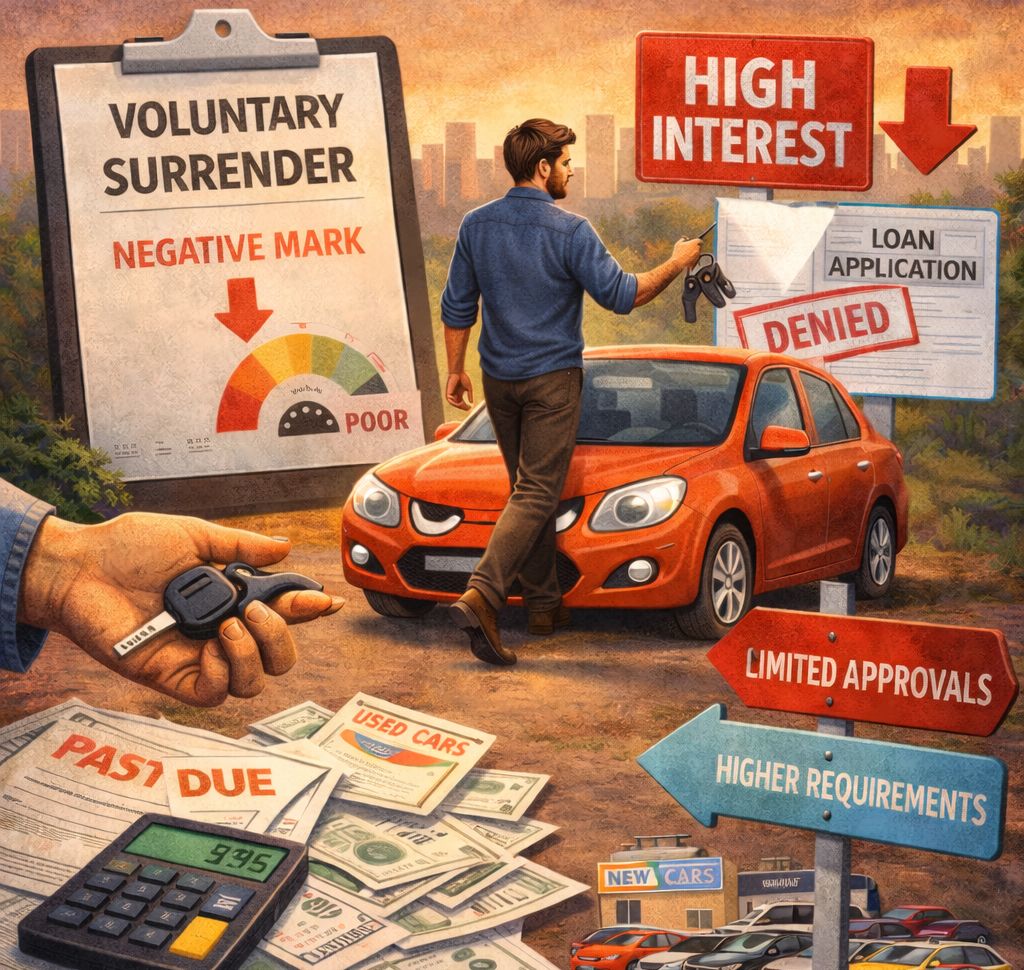
If you’re considering voluntary surrender on your car loan, you’re likely under serious financial pressure. Giving a vehicle back to the lender can feel like taking responsibility—but many drivers aren’t sure how it will affect future financing. The truth is, voluntary surrender does impact your credit and your ability to qualify for another auto loan. However, it doesn’t permanently block you from getting approved again. Understanding what happens next helps you make smarter decisions moving forward.
What Is Voluntary Surrender?
Voluntary surrender happens when you return your vehicle to the lender because you can no longer afford the payments. Instead of waiting for the lender to repossess the car, you initiate the return.
Many borrowers assume this is dramatically better than repossession. While it may reduce some costs and stress, it is still reported as a serious negative event on your credit report.
From a lender’s perspective, the outcome is similar: the loan ended in default.
How It Appears on Your Credit Report
After a voluntary surrender, your credit report typically shows:
- Account status marked as default
- Notation of voluntary surrender
- Remaining balance owed after the vehicle is sold
Once the lender sells the car at auction, the sale price is applied to your loan balance. If the sale doesn’t cover what you owed, you may still be responsible for the deficiency balance.
This remaining debt can affect your debt-to-income ratio and future loan approvals.
How Future Lenders View Voluntary Surrender
When you apply for another car loan later, lenders will evaluate three main things:
1. How Recent the Surrender Was
If it happened within the last 12 months, approval becomes more difficult. Lenders may require:
- A larger down payment
- Proof of stable income
- Shorter loan terms
- Higher interest rates
As more time passes—and you establish consistent payment history elsewhere—the event carries less weight.
2. Whether You Resolved the Deficiency Balance
Paying off or settling the remaining balance signals responsibility. While not always required for new financing, it can improve approval odds and reduce perceived risk.
3. What Your Credit Has Done Since
Lenders look for recovery, not perfection. If you’ve rebuilt stability by:
- Paying bills on time
- Reducing other debts
- Maintaining steady employment
You demonstrate that the surrender was a temporary hardship—not a pattern.
Interest Rates After Voluntary Surrender
Expect interest rates to be higher initially, especially if the surrender was recent. Lenders price risk into the loan.
However, higher rates don’t have to be permanent. If you make consistent, on-time payments for 12–24 months, refinancing may become possible once your credit profile improves.
The first approval after a voluntary surrender is often about rebuilding—not getting the lowest rate immediately.
How Long Before You Can Get Another Car Loan?
There’s no universal waiting period. Some borrowers qualify within months, while others may need a year or more.
Approval depends on:
- Current income stability
- Down payment amount
- Total debt load
- Payment history since the event
Strong proof of income and a reasonable vehicle choice can significantly improve your chances.
Strategies to Strengthen Your Next Application
If you’ve gone through a voluntary surrender, here are smart ways to prepare:
Save for a Down Payment
A down payment lowers the lender’s risk and shows financial commitment. Even a modest amount can make approval more realistic.
Choose a Practical Vehicle
Applying for a modest, reliable vehicle instead of a high-cost model signals responsible decision-making.
Avoid Multiple Hard Inquiries
Submitting applications to numerous lenders can reduce your credit score further. Working with lenders experienced in credit challenges can help minimize unnecessary denials.
Rebuild Credit Before Reapplying
If possible, give yourself time to establish positive credit habits. This may include secured credit cards or small installment accounts paid consistently.
Is Voluntary Surrender Ever the Right Choice?
Sometimes, yes. If keeping the car would cause repeated missed payments or forced repossession, voluntary surrender may prevent additional fees, towing costs, and recovery expenses.
It can also reduce emotional stress and allow you to reset financially.
However, it’s not a clean slate. The credit impact is still significant. It’s best viewed as a last resort—not a strategic exit plan.
The Bigger Financial Picture
Voluntary surrender affects your future car loan options—but it does not end them. Many drivers successfully finance again after financial setbacks.
The difference the second time is preparation. Stable income, realistic budgeting, and structured payments change the story lenders see.
Your next loan may come with stricter terms, but with consistent on-time payments, you can gradually rebuild credit and regain stronger borrowing power.
A voluntary surrender is a setback—not a permanent roadblock.