
Refinance a Zero Down Car Loan After One Year
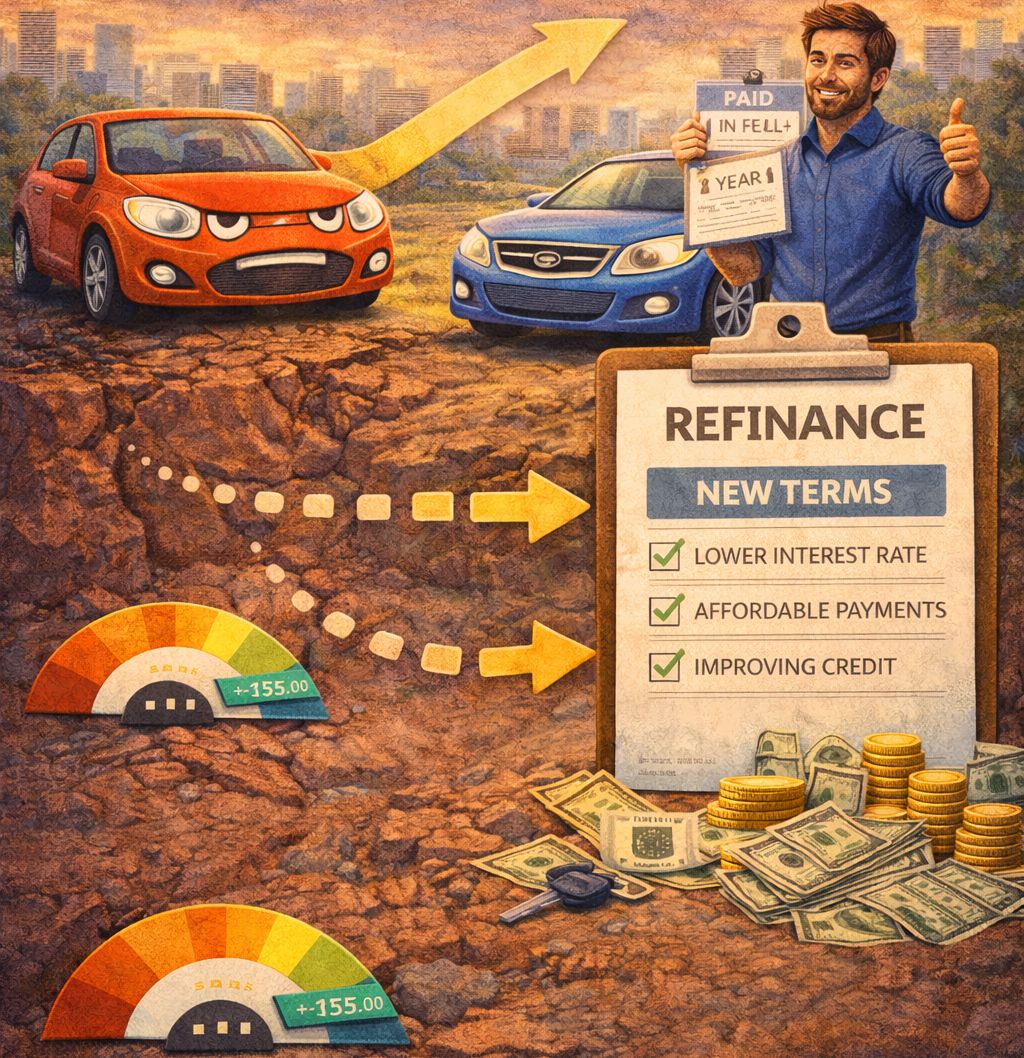
If you’ve made 12 months of on-time payments on your zero down car loan, you’ve already done something powerful—you’ve built credibility. Many borrowers with bad credit start with higher interest rates because lenders view them as higher risk. But after a full year of consistent payments, that risk profile can change. Refinancing may now be possible, giving you a chance to reduce your rate or improve your loan terms. Here’s how to know if you’re ready—and what to expect next.
Why the First 12 Months Matter So Much
The first year of an auto loan is critical, especially with zero down financing. When you put no money upfront, lenders assume more risk.
Making 12 consecutive on-time payments demonstrates:
- Payment reliability
- Financial stability
- Responsible borrowing behavior
From a lender’s perspective, that clean payment streak lowers uncertainty. It shows you can manage the obligation—even if your credit wasn’t strong when you first financed.
Step 1: Check Your Current Loan Position
Before applying to refinance, gather key information:
- Your current payoff amount
- Your interest rate (APR)
- Remaining loan term
- Your vehicle’s estimated market value
Because zero down loans often start with little or no equity, it’s important to know whether you’re still upside down.
If you owe significantly more than the car is worth, refinancing may be more difficult—but not impossible if other factors are strong.
Step 2: Review Your Credit Improvements
After 12 months of on-time payments, your credit score may have improved—especially if you’ve:
- Paid down credit cards
- Avoided new late payments
- Reduced other outstanding debts
Even moderate score gains can change your rate eligibility.
You don’t need perfect credit to refinance. You just need a stronger profile than when you first financed.
Step 3: Understand What Refinancing Changes
When you refinance, a new lender pays off your existing loan and replaces it with new terms.
You may benefit from:
- A lower interest rate
- A lower monthly payment
- A shorter loan term
- Reduced total interest over time
However, extending your loan term to lower the payment could increase total interest paid. Always review the full loan cost—not just the new payment amount.
When Refinancing Is Most Likely to Work
Refinancing a zero down loan after one year is often realistic if:
- You have 12 months of clean payment history
- Your income is stable
- Your debt-to-income ratio has improved
- Your vehicle still meets lender age and mileage guidelines
Lenders also consider loan size. If your remaining balance is too low or too high, it may limit options.
Strong documentation and financial stability improve your chances significantly.
If You Still Have Negative Equity
Zero down loans frequently result in negative equity early in the term. If you’re still upside down after one year, refinancing may require:
- A slightly higher rate than expected
- A small cash contribution to reduce balance
- Waiting a few additional months while continuing payments
Even if refinancing isn’t ideal right now, maintaining consistent payments continues to strengthen your position.
How Much Could You Actually Save?
Savings depend on how much your interest rate improves.
For example:
If you originally financed at 18% APR and refinance to 13%, you could reduce total interest costs meaningfully over the remaining term.
The longer your remaining loan period, the more impactful a lower rate becomes.
Even reducing your monthly payment by $50–$100 can create meaningful breathing room in your budget.
What to Watch Out For
Before refinancing, review:
- Loan origination fees
- Extended term length
- Prepayment procedures with your current lender
- New lender requirements for insurance coverage
Also avoid applying to too many lenders at once. Multiple hard inquiries can cause temporary credit dips.
Work strategically with lenders that review full financial profiles—not just scores.
Should You Refinance or Keep the Loan?
If your current payment is comfortable and your interest rate isn’t excessively high, staying with your current loan may be reasonable.
Refinancing makes the most sense when:
- You can secure a clearly lower rate
- Your financial profile has improved noticeably
- The new terms reduce overall loan cost
Don’t refinance simply to change lenders. Do it to improve your structure.
The Bigger Picture: From Risk to Stability
A year ago, your zero down approval may have felt like your only option. Today, after 12 months of responsible payments, you may have leverage.
Refinancing isn’t automatic—but it’s often realistic after proving financial consistency.
Your payment history is your strongest asset. Use it strategically to move toward lower risk, stronger loan terms, and long-term financial stability.