
Bad Credit Car Loan to Normal Financing Timeline
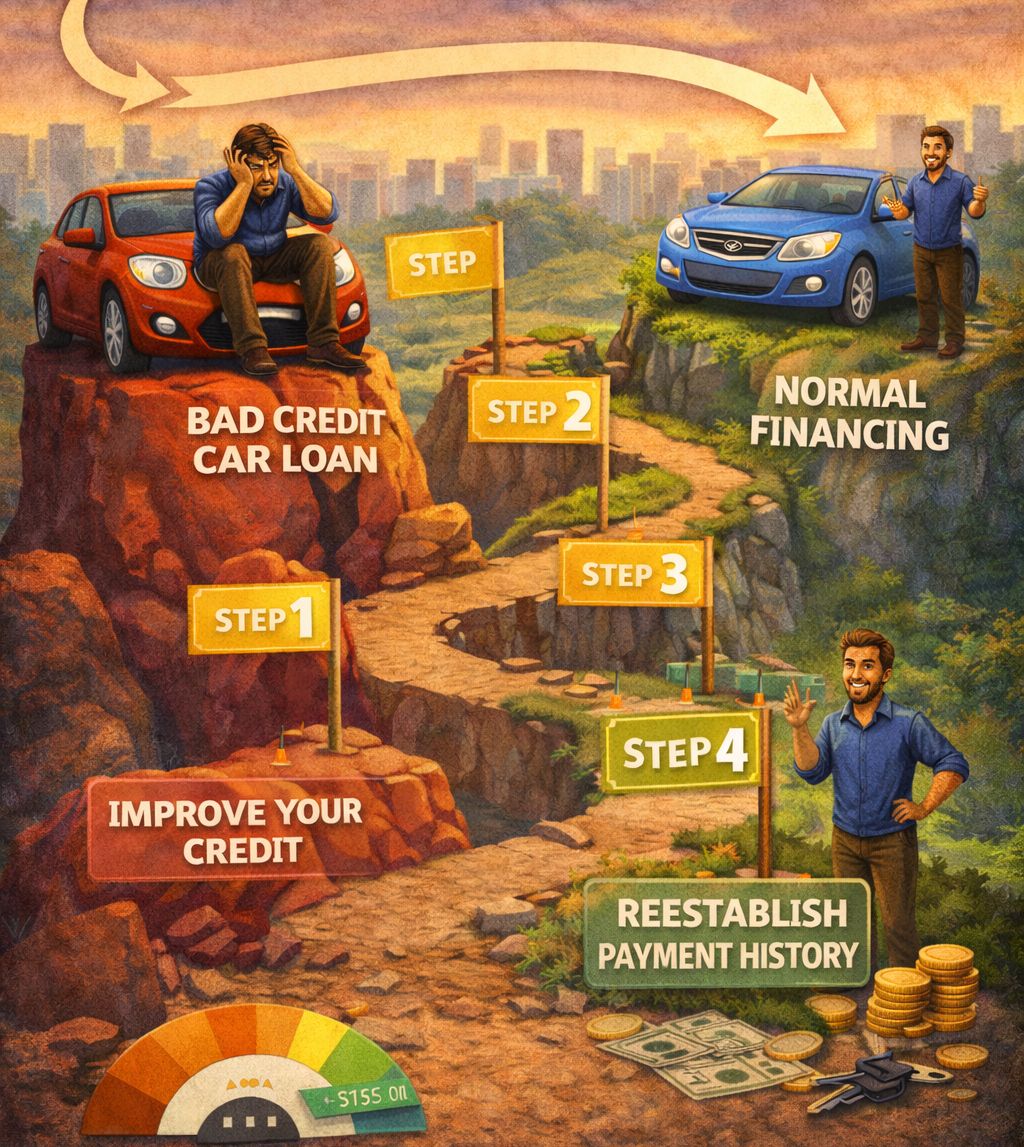
If you’re currently in a bad credit car loan, it’s easy to feel stuck with high interest and limited options. But for many drivers, that loan is just a starting point—not the final outcome. With consistent payments and smart financial moves, you can transition to more normal financing terms over time. The key is understanding what lenders look for and how long improvement usually takes. Here’s a realistic, step-by-step timeline to move from high-risk financing to stronger loan options.
Month 0: Starting the Loan
At the beginning, your approval likely came with:
- A higher interest rate
- Possibly a required down payment
- A longer loan term
This is normal for borrowers rebuilding credit. The most important thing at this stage is stability, not perfection.
Your focus now is simple: never miss a payment.
Set up automatic payments if possible. The first 3–6 months are critical for establishing a new positive payment pattern.
Months 1–6: Build a Clean Payment Streak
During the first six months, lenders are watching for consistency. Even one late payment can reset your progress.
What to do during this period:
- Make every payment on time
- Avoid taking on new high-interest debt
- Keep credit card balances low
- Monitor your credit score monthly
Small improvements in your credit score can begin within a few months of positive payment history.
At this stage, refinancing is usually premature unless your credit has improved significantly from when you applied.
Months 6–12: Evaluate Refinance Potential
After six months of on-time payments, you may begin exploring refinance options.
Lenders will look at:
- Your updated credit score
- Your loan balance vs. vehicle value
- Your income stability
- Your overall debt levels
If your credit has improved and your balance has dropped enough to reduce risk, you may qualify for better terms.
Even a modest interest rate reduction can lower total loan cost over time.
If refinancing isn’t realistic yet, don’t panic. Keep building history.
Year 1: Strengthen Your Credit Profile
By the 12-month mark, your auto loan should show a full year of positive payment history. That is powerful.
Now focus on broader financial improvements:
- Pay down credit card debt
- Avoid missed payments on any accounts
- Keep your debt-to-income ratio healthy
- Avoid maxing out revolving credit
Your credit score may see more noticeable gains during this phase. That’s when lenders start viewing you as lower risk compared to when you first financed.
Year 2: Transition to Stronger Terms
At 18–24 months, many borrowers are in a much stronger position than when they began.
You may now have:
- A significantly improved credit score
- Reduced principal balance
- A strong payment history
- Greater financial stability
This is often the ideal window for refinancing into a lower-rate loan—especially if your original rate was high due to recent negative events.
Refinancing at this stage can:
- Lower your monthly payment
- Reduce total interest paid
- Shorten your loan term
The key difference from Year 1 is that you’ve built enough history to prove financial consistency.
Year 3 and Beyond: Normal Financing Territory
After multiple years of responsible payment behavior, your profile may qualify for rates closer to traditional financing standards.
Lenders now see:
- A completed loan or near-completion
- Strong repayment consistency
- Lower credit risk
At this point, you’re no longer simply a “bad credit borrower.” You’re a borrower with demonstrated repayment strength.
If you decide to purchase another vehicle, your approval process and rate structure may look very different from your first loan.
Factors That Can Speed Up the Timeline
While time matters, actions matter more.
You may accelerate your transition by:
- Making occasional principal-only payments
- Increasing income
- Reducing revolving debt
- Avoiding unnecessary hard credit inquiries
The cleaner your financial record becomes, the faster lenders adjust their risk perception.
What Can Slow Down the Process
The timeline resets if you:
- Miss payments
- Accumulate large new debts
- Default on other accounts
One serious negative event can undo months of progress. Consistency is the most valuable asset you build during this journey.
The Big Picture
A bad credit car loan isn’t a permanent label—it’s a starting line. Most borrowers who follow a disciplined payment strategy can significantly improve their financing position within 12–24 months.
The key isn’t rushing out of the loan. It’s using the loan strategically to rebuild trust with lenders.
With patience, structure, and responsible credit habits, moving from high-interest financing to more normal terms is absolutely achievable.