
When to Say No to a Zero Down Car Loan
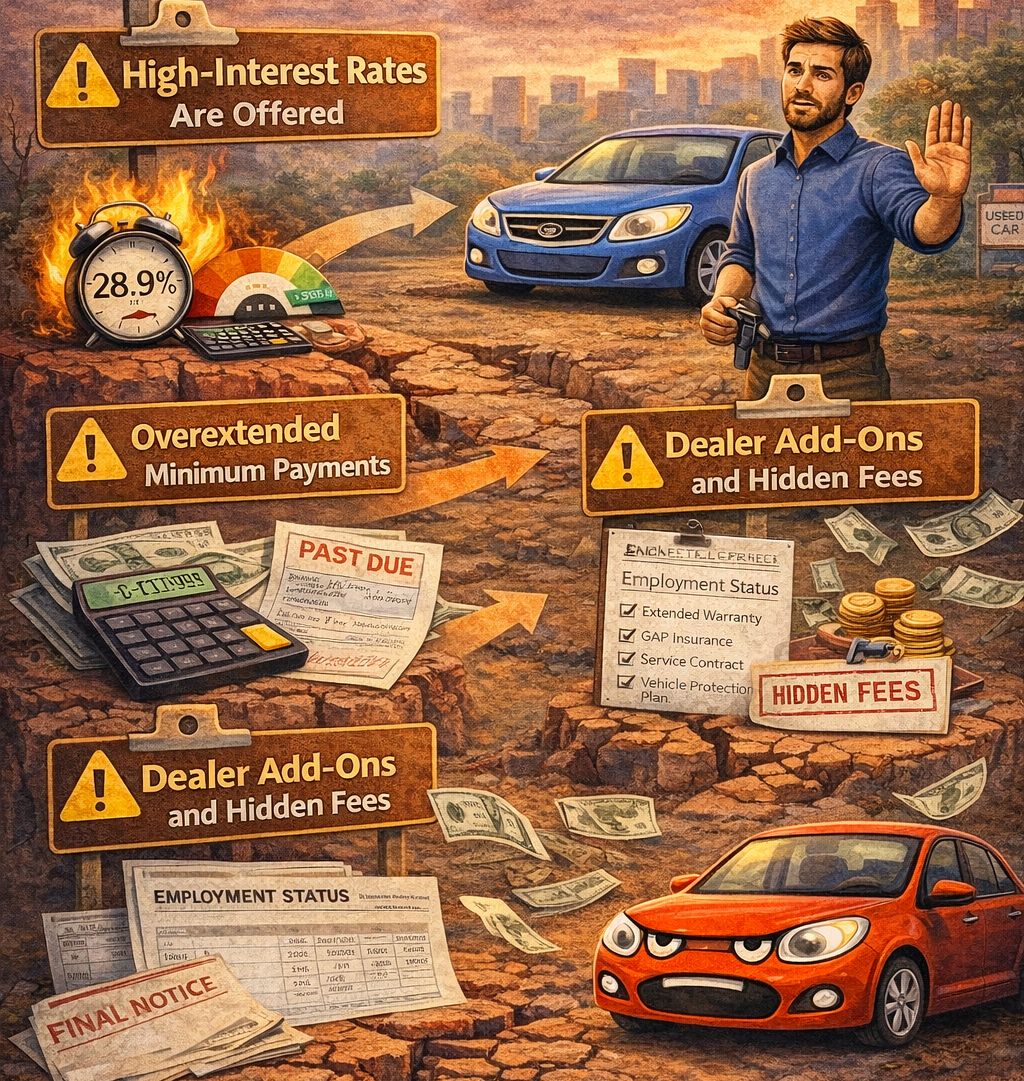
A zero down car loan can seem like the perfect solution when your savings are limited. No upfront cash, fast approval, and you drive away the same day. But for buyers with bad credit or tight budgets, zero down isn’t always the smart move. In some situations, it can increase your long-term risk and cost far more than you expect. Knowing when to say no can protect your credit, your budget, and your financial stability.
When Your Monthly Budget Is Already Tight
Zero down loans often come with higher interest rates and larger loan balances. Without a down payment reducing the amount financed, your monthly payment may be higher than expected.
If your budget is already stretched by rent, utilities, food, and insurance, adding a high car payment can create constant stress.
Before agreeing, ask yourself:
- Can I handle this payment comfortably every month?
- Would one unexpected expense put me behind?
If the answer is yes, it may be safer to wait and save even a modest down payment.
When You Have Unstable Income
Income stability is critical for zero down approvals. But beyond getting approved, you should think about sustainability.
If you:
- Recently changed jobs
- Work variable hours
- Depend on seasonal income
- Rely heavily on commission
A zero down loan increases your risk if income dips even temporarily. Without upfront equity, you could quickly fall behind.
In these cases, waiting for more income stability—or building savings—may be the smarter choice.
When the Loan Term Is Extremely Long
To make zero down payments look affordable, some loans stretch to 72 or even 84 months. While this lowers the monthly payment, it significantly increases the total interest paid.
Long terms also increase the risk of negative equity. If your car depreciates faster than you pay down the loan, you could owe more than it’s worth for years.
If the only way the payment works is through a very long term, it may be a sign the vehicle is outside your comfort zone financially.
When You’re Already Carrying High Debt
If your credit cards are near their limits or you’re managing multiple loans, adding a zero down car loan can push your debt-to-income ratio too high.
High total debt:
- Increases financial strain
- Raises the risk of missed payments
- Limits refinancing options later
In this case, it may be better to reduce other balances first before taking on new financing without a down payment.
When You Don’t Have an Emergency Fund
A down payment isn’t just about lender risk—it’s about your own protection.
If you don’t have at least a small emergency cushion, zero down financing leaves you vulnerable.
Unexpected events like:
- Medical expenses
- Car repairs
- Temporary job gaps
Can quickly turn into missed payments. Saving even $500–$1,000 before financing may provide far more stability than driving off immediately.
When the Vehicle Price Is at the Top of Your Budget
Zero down sometimes encourages buyers to focus on “approval” instead of affordability.
If you’re choosing a vehicle at the upper limit of what you qualify for, without putting money down, you increase the total amount financed—including taxes and fees.
A lower-priced, reliable vehicle with a small down payment often creates a much healthier financial structure than stretching for something newer or more expensive.
When You Plan to Trade or Refinance Soon
If your plan is to refinance in 6–12 months or trade into another vehicle quickly, zero down may work against you.
Without upfront equity, you may start the loan already close to negative equity. This makes refinancing harder and can require additional cash later to exit the loan.
A modest down payment improves your loan-to-value ratio immediately and gives you flexibility sooner.
When the Only Selling Point Is “No Money Today”
Sometimes zero down offers are marketed as the main benefit, without clear discussion of:
- Total loan cost
- Interest rate
- Long-term financial impact
If the focus is entirely on “drive away today,” slow down. Approval is important—but structure matters more.
Always review the APR, total repayment amount, and full loan term before committing.
When Zero Down Does Make Sense
Zero down isn’t automatically bad. It can make sense if:
- You have stable, consistent income
- Your monthly budget has breathing room
- Your overall debt is manageable
- The vehicle is reasonably priced
- You understand the total cost
The key is financial strength—not just urgency.
The Bottom Line
Zero down car loans can be helpful tools—but only in the right situation. If your income is unstable, your budget is tight, or you lack savings, saying no may be the most responsible decision you can make.
For borrowers rebuilding credit, stability matters more than speed. Waiting, saving, or choosing a lower-priced vehicle may put you in a stronger position long term.
Approval is exciting—but sustainable payments protect your credit and your future.