
Zero Down Offers on Trucks, SUVs and Small Cars
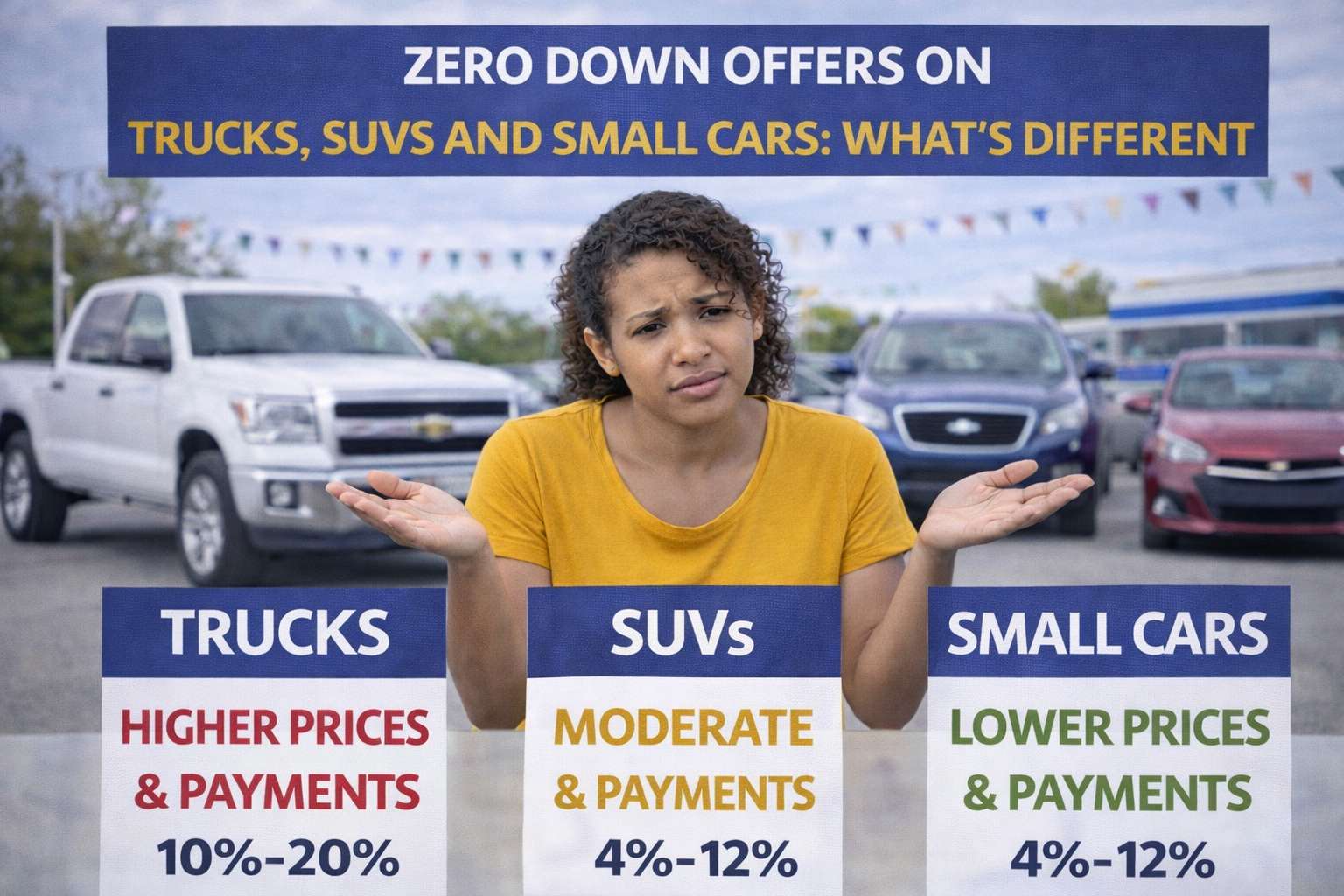
Zero down offers can make very different vehicles look equally affordable at first glance. But a zero down loan behaves differently depending on whether you’re financing a truck, an SUV, or a small car. For buyers with bad or rebuilding credit, these differences affect approval terms, interest paid, and how long you stay in negative equity. Choosing the wrong vehicle type can quietly turn a convenient offer into a long-term burden. This guide explains what’s different about zero down offers across trucks, SUVs, and small cars—so you can spot risk before you commit.
Why Vehicle Type Matters With Zero Down
Zero down means the entire purchase price—and often additional costs—are financed from day one. That makes loan size and depreciation more important than styling or features.
Different vehicle types carry different price points, resale patterns, and ownership costs, which change how zero down loans perform over time.
Small Cars: Lower Risk, Faster Stability
Small cars typically have lower purchase prices. With zero down, that translates to smaller loan balances and less interest paid overall.
Because the loan starts smaller, equity tends to build sooner—even with longer terms. This improves flexibility if you need to sell, trade, or refinance later.
What to watch
While small cars are generally safer financially, stretching the loan term too far can still create prolonged negative equity.
SUVs: Middle Ground With Trade-Offs
SUVs usually sit between small cars and trucks in price. Zero down offers on SUVs often aim to balance comfort and affordability.
However, many SUVs depreciate faster than buyers expect, especially as fuel and maintenance costs rise with age.
Risk profile
Zero down SUV loans often carry:
- Larger balances than small cars
- Longer periods of negative equity
- Higher insurance and fuel costs
Careful budgeting is essential to keep these loans manageable.
Trucks: High Value, High Exposure
Trucks often hold value better than many vehicles—but they also cost more upfront. With zero down, that higher price becomes immediate exposure.
Loan balances are larger, interest adds up faster, and payments can strain budgets if income fluctuates.
Demand isn’t guaranteed
While trucks can have strong resale demand, it’s often location- and use-dependent. If demand drops, exiting a zero down truck loan can become difficult.
How Loan Size Shapes Zero Down Outcomes
The bigger the loan, the more sensitive it becomes to interest rate changes and term length.
Small cars tolerate zero down better because the margin for error is wider. Trucks, on the other hand, leave little room for unexpected expenses or income shifts.
Depreciation and Negative Equity by Vehicle Type
- Small cars: Slower depreciation relative to loan size
- SUVs: Moderate depreciation that can outpace payoff early
- Trucks: Strong value retention, but large balances keep equity negative longer
Understanding this helps set realistic expectations about flexibility.
Insurance and Ownership Costs Add Pressure
Zero down buyers often focus on payment alone, but ownership costs matter.
- Trucks and SUVs usually cost more to insure
- Fuel expenses are higher for larger vehicles
- Repairs can be more expensive over time
These costs reduce the margin for error during long loan terms.
Why Approval Doesn’t Mean Safety
Zero down approvals are often structured to make payments fit the budget—on paper.
Longer terms and higher interest rates can make risky vehicles appear affordable. Over time, total cost and limited flexibility reveal the downside.
Matching Vehicle Type to Your Budget Reality
Ask yourself:
- How stable is my income?
- Could I handle higher fuel or insurance costs?
- What happens if I need to exit the loan early?
Honest answers usually point toward smaller, more conservative options with zero down.
When Larger Vehicles May Still Work
Zero down loans on SUVs or trucks can make sense if:
- The vehicle price is modest for its category
- Income is stable and predictable
- The loan term isn’t excessively long
Even then, risk remains higher than with smaller vehicles.
Why Small Cars Often Win With Zero Down
Small cars don’t rely on market demand or resale strength to succeed. They work because the math is simpler and the loan is smaller.
For bad credit buyers, simplicity often equals safety.
Zero Down Is About Choosing Where Risk Lives
Zero down doesn’t remove risk—it shifts it into the loan. Vehicle type determines how heavy that risk becomes over time.
Choosing the right category can mean the difference between steady progress and years of limited options.
Long-Term Thinking Beats Short-Term Convenience
Zero down offers are tempting, but vehicle choice determines whether they help or hurt.
A vehicle that keeps costs predictable and equity within reach protects your future—not just today’s approval.