
Zero Down vs Saving a Down Payment: What’s Better?
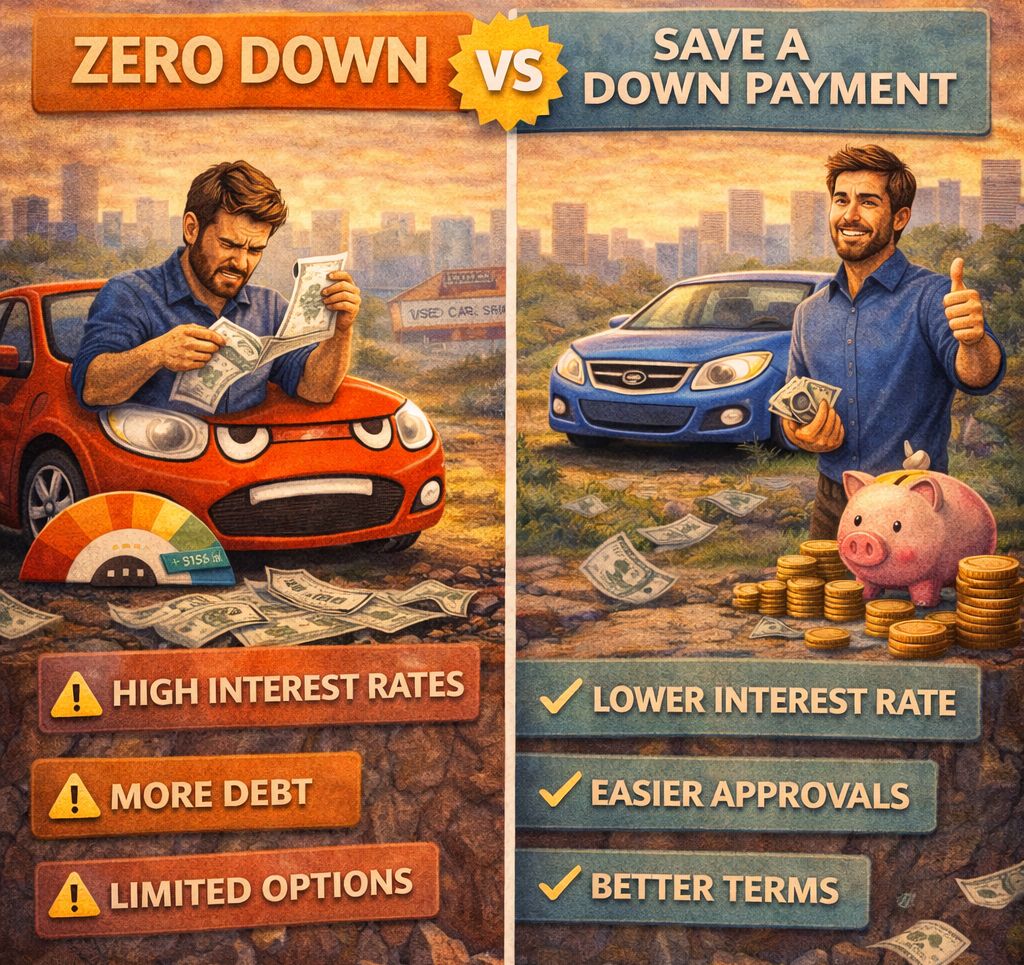
If you’re buying a car with bad credit, one of the biggest decisions you’ll face is whether to choose a zero down car loan or wait and save for a down payment. Zero down offers speed and convenience, while saving upfront cash can lower your long-term costs. The right choice depends on your income stability, urgency, and overall financial health. Before committing, it’s important to understand how each option affects your payments, interest, and future flexibility.
What Zero Down Really Means
A zero down car loan allows you to finance the full price of the vehicle, including taxes and fees, without paying cash upfront.
The main benefit is obvious:
You get a vehicle immediately without waiting to save.
For borrowers who need transportation for work or family responsibilities, this can be critical. However, financing the entire balance increases the amount borrowed—and the total interest paid over time.
Zero down works best when the borrower has strong, steady income and room in the monthly budget.
What Saving a Down Payment Changes
Even a modest down payment—$500, $1,000, or more—can shift your loan structure in meaningful ways.
Here’s what a down payment does:
- Reduces the amount financed
- Lowers total interest paid
- Improves loan-to-value ratio
- May increase approval chances
- Potentially qualifies you for better terms
A lower starting balance gives you more breathing room if you ever need to refinance or sell the vehicle.
Saving requires patience, but it strengthens your financial position before the loan even begins.
Comparing Monthly Payments
Zero down often results in slightly higher monthly payments because the loan amount is larger.
For example:
- Zero down: Finance $18,000
- $1,000 down: Finance $17,000
That $1,000 difference reduces both principal and long-term interest.
While the monthly difference may not look dramatic, over 60–72 months, it can add up significantly.
If your budget is already tight, lowering the payment even slightly can reduce stress.
The Risk of Negative Equity
One of the biggest differences between zero down and saving first is equity.
With zero down, you may begin the loan at or near negative equity because cars depreciate quickly. If you need to sell or refinance early, you could owe more than the car is worth.
A down payment provides an equity cushion from day one. This makes it easier to transition out of the loan later if needed.
If you plan to keep the car long-term, this risk may matter less. But if you expect changes in the near future, equity matters.
When Zero Down May Be the Better Fit
Zero down can make sense if:
- You urgently need a vehicle to maintain employment
- Your income is stable and predictable
- Your debt levels are manageable
- You understand the full cost of the loan
- You have some emergency savings already
In these cases, the benefit of immediate transportation may outweigh the extra long-term interest.
The key is financial readiness—not just convenience.
When Waiting to Save Is Smarter
Saving for a down payment is often the better choice if:
- Your income is unstable or recently changed
- Your budget is stretched
- You have high credit card balances
- You lack emergency savings
- The loan term offered is very long (72+ months)
Waiting can feel frustrating. But strengthening your position first may result in better terms and lower stress.
Even saving for a few months can improve your debt-to-income ratio and give you leverage when applying.
Think Beyond Approval
It’s easy to focus on whether you can get approved. But approval alone doesn’t determine success.
Ask yourself:
- Will this payment feel comfortable six months from now?
- Can I handle insurance, maintenance, and fuel costs?
- If an emergency arises, do I have options?
The goal isn’t just getting into a car—it’s staying financially stable while you pay it off.
Long-Term Cost vs Immediate Need
The zero down vs saving decision often comes down to urgency.
If your current situation makes waiting impossible, zero down may be necessary. But if you have time and flexibility, even a small down payment can reduce total loan cost and risk.
Think of a down payment as buying stability. It reduces future pressure and creates options.
The Bottom Line
There is no one-size-fits-all answer. Zero down offers speed and access, while saving upfront strengthens your position and lowers long-term cost.
For borrowers with bad credit, stability matters more than speed. Evaluate your income consistency, emergency savings, and total debt before deciding.
The best option is the one that supports consistent, on-time payments without stretching your finances too thin.
The Bottom Line
Zero down car loans can be helpful tools—but only in the right situation. If your income is unstable, your budget is tight, or you lack savings, saying no may be the most responsible decision you can make.
For borrowers rebuilding credit, stability matters more than speed. Waiting, saving, or choosing a lower-priced vehicle may put you in a stronger position long term.
Approval is exciting—but sustainable payments protect your credit and your future.