
Zero Down Car Loans: Everything You Need to Know

Carfixcredit | Updated April 2026 | 18 min read
Most people assume you need a stack of cash saved up before you can finance a car..
That’s not always true!
Zero down car loans let you drive away without putting anything down upfront. No down payment, no waiting until you’ve saved enough, no delaying a purchase you actually need to make right now.
But like most things in auto financing, there’s more to it than the headline suggests. Zero down loans work well for some buyers and less well for others. Knowing the difference before you apply saves you from making a decision that costs you more in the long run.
This guide covers everything. What zero down loans are, who qualifies, where to get them, what the real tradeoffs look like, and how to make the most of one if it’s the right move for your situation.
What Is a Zero Down Car Loan?
A zero down car loan is exactly what it sounds like. You finance the full purchase price of the vehicle without putting any money down at the start.
Instead of covering part of the cost upfront, you borrow the entire amount and pay it back over time with interest.
It doesn’t mean the car is free. It means the cost is spread entirely across your monthly payments. Every dollar of the vehicle price, plus interest, gets repaid through the loan.
Who Typically Qualifies for Zero Down Financing?
Not every buyer gets approved for zero down. Lenders take on more risk when there’s no upfront equity in the vehicle. Here’s who tends to qualify.
Buyers With Strong Credit
The cleaner your credit, the easier zero down financing is to get. Lenders are more comfortable with the risk when your history shows you pay your debts reliably.
Buyers With Steady, Verifiable Income
Income stability matters a lot when there’s no down payment. Lenders want to know the monthly payment is manageable before they approve a loan with no upfront cushion.
Buyers With a Trade-In
A trade-in vehicle acts as equity even if you’re not handing over cash. If your trade-in is worth $4,000, that value can replace a cash down payment in many cases. The lender sees it as skin in the game.
Buyers With Bad or Challenged Credit
This surprises some people but yes, bad credit buyers can qualify for zero down financing too. The terms will be less favorable and the rate will be higher, but approval is possible. Finding zero down options with bad credit takes the right lender, not the impossible search most people assume it is.
The Real Benefits of Zero Down Car Loans
Let’s talk about why people choose this option in the first place.
You Keep Your Cash
The most obvious benefit. Instead of putting $2,000 or $3,000 into a car, you keep that money in your account. That matters a lot if you’re dealing with other financial priorities, an emergency fund, outstanding bills, or simply need the flexibility.
You Get Into a Vehicle Faster
Saving for a down payment takes time. If you need a car now, whether for work, family, or replacing a vehicle that just died, zero down removes the waiting period entirely.
Your Savings Stay Intact
Liquidating savings for a down payment can leave you financially exposed. If something unexpected comes up the month after you buy the car, you’ve got nothing to fall back on. Zero down keeps that buffer in place.
It Works for More Situations Than People Expect
A lot of buyers write off zero down before they even check. They assume their credit or income disqualifies them. In many cases they’re wrong. The range of buyers who actually qualify is broader than most people realize.
The Honest Tradeoffs
Zero down isn’t free money. There are real tradeoffs worth understanding before you commit.
Higher Monthly Payments
You’re financing more. That means your monthly payment will be higher than it would be with a down payment. How much higher depends on the loan amount, the rate, and the term.
More Interest Over the Life of the Loan
A larger loan balance means more interest paid overall. Even at the same rate, borrowing $25,000 costs you more in total interest than borrowing $22,000. That difference adds up over a multi-year loan.
Negative Equity Risk
Cars lose value fast. A new vehicle can lose 15 to 20 percent of its value in the first year alone. If you financed the full purchase price with nothing down, there’s a real chance you’ll owe more than the car is worth for a significant stretch of the loan. That’s called being underwater or upside down on the loan.
If the car gets totaled or you need to sell before you’ve paid enough down, being underwater creates a financial problem. Gap insurance exists specifically for this situation and is worth considering on zero down loans.
Harder to Qualify With Very Low Credit
The lower your credit score, the more lenders want to see a down payment as a buffer. Zero down is possible with bad credit but the options narrow as the score drops. Some lenders will require at least something down below a certain threshold.
Zero Down vs. Low Down: What Actually Makes More Sense?
Sometimes the choice isn’t between zero down and a large down payment. It’s between zero down and putting in just a little.
Even coming in with 0 or little down can change your loan terms significantly. A small amount down reduces your loan balance, lowers your monthly payment, and reduces how long you’re underwater on the vehicle.
If you have $500 to $1,000 available, putting it down is almost always worth doing. It doesn’t have to be thousands. A modest amount signals to lenders that you’re committed, reduces your total interest cost, and gets you to positive equity faster.
That said, if putting anything down means wiping out your emergency fund or creating a cash flow problem, zero down is the smarter move. Protecting your financial stability matters more than a slightly better loan structure.
Types of Zero Down Car Loans
Not all zero down financing works the same way. Here are the main variations.
Standard Zero Down Auto Loans
A traditional auto loan where the lender finances the full purchase price. Available through banks, credit unions, online lenders, and dealership financing networks. Terms, rates, and approval criteria vary significantly by lender.
Dealer Incentive Programs
Some manufacturers and dealerships run promotional zero down offers, particularly on new vehicles. These are often tied to specific models, specific credit tiers, or limited time windows. The headline looks attractive but read the fine print. A zero down promotion with a high rate or a very long term may cost more overall than a loan with a modest down payment at a better rate.
Lease to Own With Zero Down
Some lease structures allow you to start with no upfront payment and include a buyout option at the end. Monthly payments on leases are typically lower than loan payments but you don’t own the vehicle at the end unless you exercise the buyout.
Bad Credit Zero Down Programs
Specialist lenders who work with subprime buyers sometimes offer zero down approvals when other factors in the application are strong. Income, stability, and the vehicle being financed all play into whether this is available for a specific buyer.
Where to Get a Zero Down Car Loan
Knowing where to look saves time and protects your credit from unnecessary hard inquiries.
Online Lending Networks
One of the best starting points for zero down loans, especially for buyers with challenged credit. You submit one application and it gets matched against multiple lenders simultaneously. You find out what you qualify for without applying individually to each lender.
Credit Unions
Credit unions tend to be flexible and member-focused. If you have an existing relationship with one, it’s worth asking what zero down options look like for your situation. Their rates are often more competitive than banks on similar products.
Dealership Financing
Convenient and fast. The dealer submits your application to their lender network and finds you a match on the spot. Useful but remember that dealers can mark up the rate above what you were approved for. Know your baseline before you sit down.
Subprime Specialist Lenders
If your credit is challenged, these are the lenders most likely to have a zero down option that works for your profile. They’re built for exactly this situation and understand it in a way that traditional banks don’t.
How to Improve Your Chances of Getting Approved
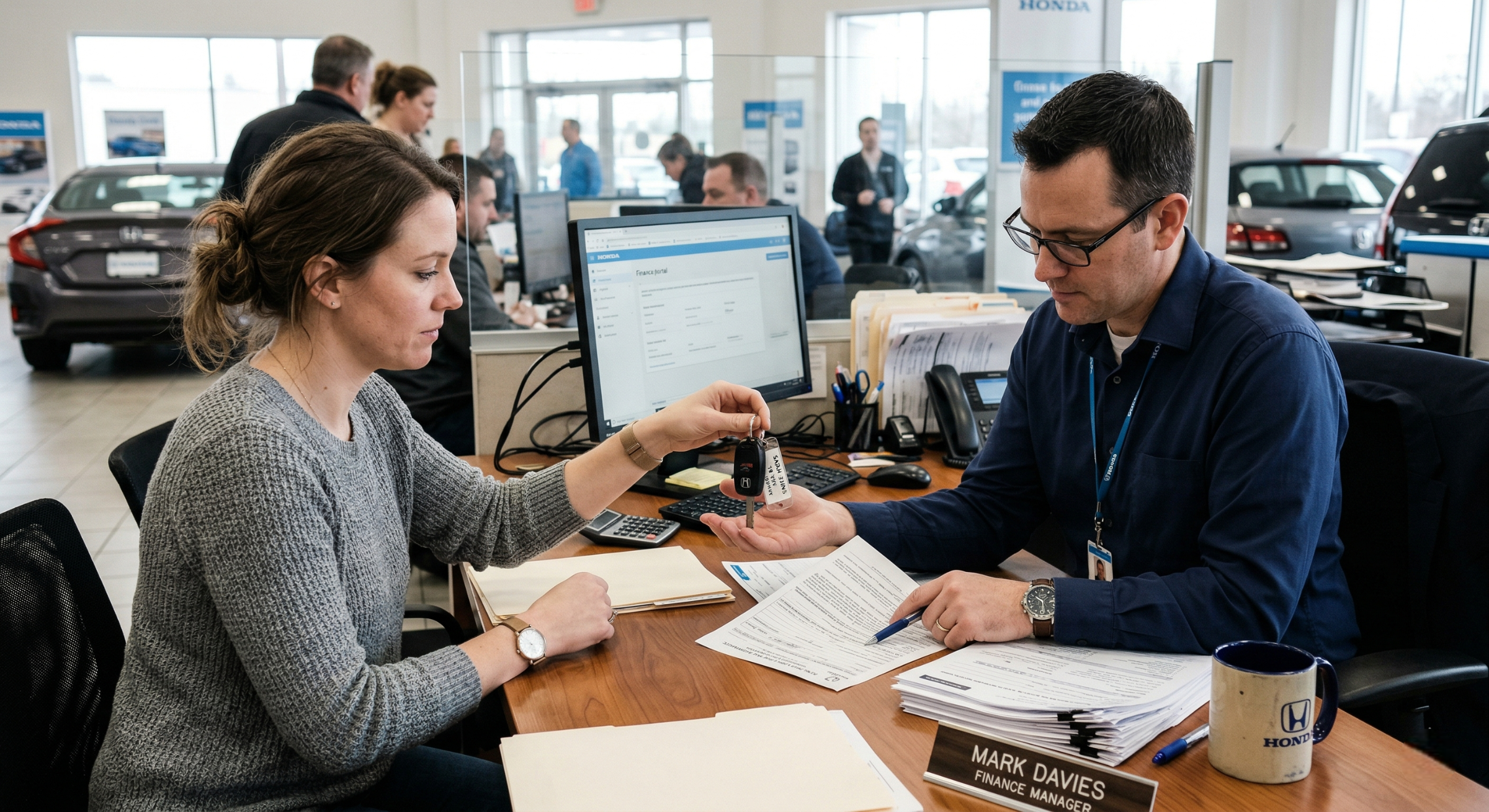
Zero down loans require lenders to take on more risk. Here’s how to make your application as strong as possible.
Know Your Credit Score Before You Apply
Check your report first. Dispute any errors. Even a small score improvement from correcting a mistake can change the terms you’re offered.
Show Stable Income
The stronger your income documentation, the more comfortable a lender feels approving zero down. Pay stubs, bank statements, or tax returns depending on your employment situation.
Keep the Vehicle Price Reasonable
A lender is more willing to finance 100 percent of a $15,000 vehicle than 100 percent of a $40,000 one for a buyer without a down payment. Keeping the purchase price in a range that makes sense for your income and credit profile helps significantly.
Consider a Co-Signer
A co-signer with strong credit can make zero down approval possible for buyers who wouldn’t qualify on their own. Both parties need to understand the commitment before anyone signs anything.
Use a Trade-In
If you have a vehicle to trade in, use it. The trade-in value acts as equity and functions similarly to a cash down payment in most lenders’ eyes. Even an older vehicle worth a few thousand dollars can make a meaningful difference to your approval odds.
Zero Down Car Loans and Your Credit Score
Your credit score affects your zero down loan in two ways. Whether you get approved and what rate you pay.
Here’s roughly how it breaks down.
Excellent credit, 750 and above, and zero down is straightforward. Lenders compete for these borrowers and the rate reflects that.
Good credit, 700 to 749, and you’ll still get solid options. Zero down is very accessible at this level.
Fair credit, 640 to 699, and you may face more conditions. Some lenders will want a small down payment. Others will approve zero down at a higher rate.
Poor credit, below 640, and zero down is harder but not impossible. The right lender matters a lot here. Rates will be higher and some lenders will require at least something down. But approval with the right specialist lender is a real possibility.
No credit history follows similar logic to poor credit. First-time buyer programs and credit union relationships help here.
Gap Insurance and Why It Matters on Zero Down Loans
If you’re taking out a zero down loan, gap insurance deserves a serious look.
Here’s the situation. You finance the full price of a vehicle. The moment you drive off the lot, the car starts losing value. If the car gets totaled in month three of a 60-month loan, your insurance pays out the current market value of the vehicle. That number is almost certainly less than what you still owe on the loan.
Without gap insurance, you’re on the hook for the difference. With gap insurance, that gap gets covered.
On a zero down loan, the risk of this situation is higher than on a loan where you put money down because you start with no equity cushion at all. The math changes fast when the vehicle depreciates and you haven’t paid enough of the principal yet to catch up.
Gap insurance is usually available through the dealer, the lender, or your auto insurer. Check all three for pricing before you accept the first offer.
State-Specific Considerations for Zero Down Loans
Auto lending rules vary by state and some of those rules affect what zero down loans look like in practice.
Interest Rate Caps
Some states cap how high lenders can set their rates. This protects buyers from extreme rates but can also reduce the number of lenders willing to offer zero down products in that market.
Dealer Disclosure Requirements
Several states require dealers to disclose the full cost of financing clearly before you sign. Knowing your state’s requirements means you’re harder to catch off guard when reviewing loan documents.
Lender Licensing
Not every lender operates in every state. Online lending networks that match you across multiple lenders handle this automatically, but if you’re approaching lenders directly it’s worth confirming they’re licensed to operate in your state before you submit an application.
Common Mistakes to Avoid With Zero Down Loans
Choosing the Longest Term to Get the Lowest Payment
An 84-month loan on a zero down purchase means seven years of payments on a vehicle that’s losing value the whole time. You’ll be underwater for a long time and pay significantly more in total interest. Keep the term as short as your budget genuinely allows.
Skipping Gap Insurance
On a zero down loan, skipping gap insurance is a gamble that costs very little to avoid. The premium is usually modest. The exposure it protects against is not.
Not Shopping the Rate
Zero down approval from one lender doesn’t mean it’s the best rate available. Even a one or two percent difference in APR adds up to real money over a multi-year loan. Get more than one offer before you decide.
Financing Add-Ons You Don’t Need
Extended warranties, paint protection, tire and wheel packages. These get rolled into your loan balance, which is already at the full vehicle price. Every unnecessary add-on increases what you owe and what you pay in interest. Evaluate each one separately.
Ignoring the Total Cost of the Loan
The monthly payment is the number dealers want you to focus on. The total cost of the loan is the number that actually tells you what the vehicle is going to cost you. Always ask for the total repayment amount, not just the monthly figure.
How to Use a Zero Down Loan to Build Credit
A zero down auto loan, managed well, is a real credit-building tool.
Here’s how to make it work for you.
Make every payment on time. Payment history is the single biggest factor in your credit score. A clean, consistent record on an active loan moves the number steadily upward.
Set up autopay if your lender offers it. It removes the risk of a forgotten payment date and gives you one less thing to manage manually.
Check your score every few months. Free monitoring is available through most credit cards and apps. You should see upward movement within the first six to twelve months of consistent payments.
Revisit refinancing at twelve to eighteen months. If your score has improved, refinancing into a lower rate reduces your monthly payment and your total interest paid. That’s a real financial win that comes directly from managing the loan responsibly.
The Bottom Line
Zero down car loans are a legitimate option for a wide range of buyers. They’re not a workaround or a last resort. For the right buyer in the right situation, they make complete financial sense.
The key is going in with clear eyes. Understand the tradeoffs, know your credit situation, keep the vehicle price reasonable, and consider gap insurance. Do those things and a zero down loan can get you into a reliable vehicle without disrupting the rest of your financial picture.
The buyers who struggle with zero down loans are usually the ones who stretched the term too long, skipped gap coverage, or didn’t shop the rate. Avoid those mistakes and the rest tends to take care of itself.
How Carfixcredit Helps You Get Into a Vehicle With Zero Down
Not every lender offers zero down financing and not every buyer knows where to look.
Carfixcredit connects buyers across the United States with lenders who work with real-world credit situations, including zero and low down payment options. Whether your credit is strong, challenged, or somewhere in between, the network is built to find what’s actually available for your specific profile.
No runaround, no pressure. Checking what you qualify for takes two minutes and won’t affect your credit score.
If you’ve been waiting until you’ve saved enough for a down payment, it’s worth finding out whether you actually need to.